When it comes to baking bread, choosing the right type of yeast can significantly impact the final product. Bread machine yeast and regular yeast are two common options, each with its unique characteristics and uses.
Bread machine yeast is specifically formulated for use in bread machines, while regular yeast can be used in various baking applications. Understanding their differences can help you achieve the best results in your bread-making endeavors.
Understanding Bread Machine Yeast
Bread machine yeast, often labeled as instant yeast or rapid-rise yeast, is specifically formulated for use in bread machines.
It is designed to activate quickly, allowing for a faster rise in dough.
One of its key features is that it can be mixed directly with dry ingredients, eliminating the need for proofing in water.
This characteristic makes it a convenient choice for those who prefer a streamlined baking process.
Bread machine yeast is particularly effective in recipes that require a quick turnaround, making it ideal for busy bakers.
Exploring Regular Yeast
Regular yeast, commonly known as active dry yeast, has been a staple in traditional baking for many years.
Unlike bread machine yeast, it requires proofing in warm water before it can be added to the dough.
This step is essential to activate the yeast and ensure it works effectively in the rising process.
Active dry yeast typically takes longer to rise compared to its bread machine counterpart.
This slower process can enhance the flavor and texture of the bread, making it a preferred choice for artisanal baking.
Key Differences in Usage
The primary difference between bread machine yeast and regular yeast lies in their application.
Bread machine yeast is tailored for the specific environment of a bread machine, where conditions are controlled for optimal yeast activity.
In contrast, regular yeast is versatile and can be used in various baking methods, including hand-kneading and traditional ovens.
When using bread machine yeast, bakers can skip the proofing step, which saves time and simplifies the process.
On the other hand, regular yeast may require more attention to detail, particularly in temperature and timing, to achieve the desired results.
Flavor and Texture Considerations
Flavor development is another area where these two types of yeast differ.
Regular yeast, with its longer fermentation time, often contributes to a more complex flavor profile in bread.
The slower rise allows for the development of more nuanced tastes, which can be particularly appealing in artisan breads.
In contrast, bread machine yeast, while efficient, may not provide the same depth of flavor.
However, it still produces a light and airy texture, making it suitable for everyday bread recipes.
Storage and Shelf Life
Both bread machine yeast and regular yeast have similar storage requirements.
They should be kept in a cool, dry place, and once opened, it’s best to store them in an airtight container in the refrigerator to extend their shelf life.
Typically, both types of yeast can last for several months when stored properly.
However, it’s always wise to check the expiration date before use to ensure optimal performance in baking.
Choosing the Right Yeast for Your Needs
When deciding between bread machine yeast and regular yeast, consider your baking habits and preferences.
If you frequently use a bread machine and value convenience, bread machine yeast may be the ideal choice for you.
Conversely, if you enjoy traditional baking methods and have the time to invest in the process, regular yeast could enhance your bread-making experience.
Ultimately, both types of yeast can yield delicious results, so experimenting with each can lead to discovering your personal favorite for various recipes.
Comparing Bread Machine Yeast and Regular Yeast
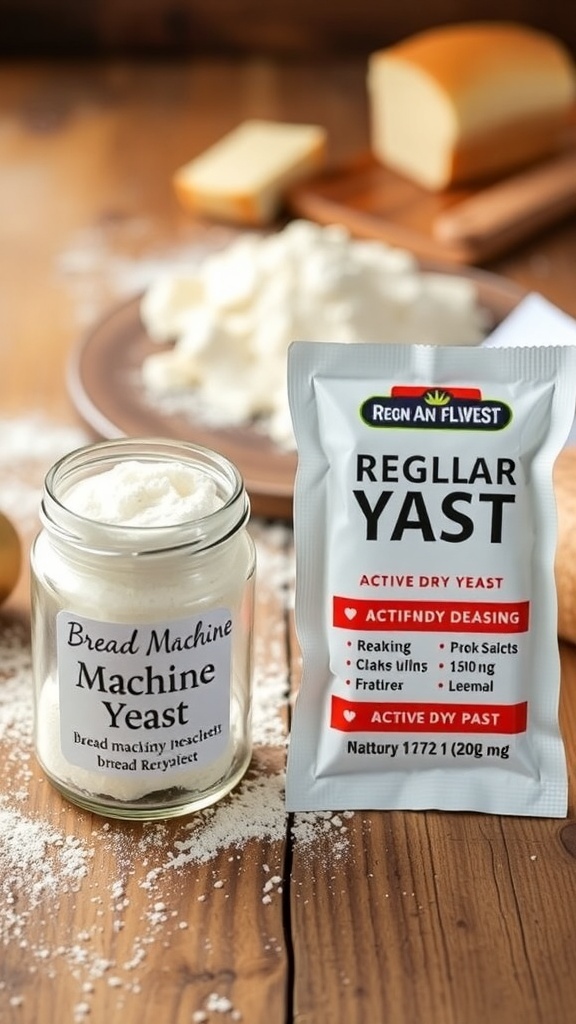
Bread machine yeast, also known as instant yeast or rapid-rise yeast, is designed to work quickly and efficiently in bread machines. It can be added directly to dry ingredients without needing to be dissolved in water first. Regular yeast, often referred to as active dry yeast, requires proofing in warm water before use and may take longer to rise, making it suitable for traditional baking methods.