When it comes to bread, many people find themselves debating between homemade and store-bought options. Homemade bread offers the advantage of freshness and the ability to customize ingredients, while store-bought bread provides convenience and a longer shelf life.
Understanding the differences in taste, texture, and nutritional value can help you make an informed decision about which option best suits your lifestyle and preferences.
Homemade Bread: The Art of Baking
Homemade bread is often celebrated for its freshness and the personal touch it brings to the table.
With just a few simple ingredients—flour, water, yeast, and salt—you can create a loaf that is not only delicious but also tailored to your preferences.
The process of making bread at home allows for creativity, whether you want to add herbs, seeds, or even a hint of sweetness with sugar or butter.
The aroma of freshly baked bread wafting through the kitchen is a sensory experience that store-bought options simply cannot replicate.
Each loaf is unique, with a golden crust and a soft, fluffy interior that beckons to be sliced and enjoyed.
The satisfaction of kneading the dough and watching it rise is a rewarding part of the baking journey.
Store-Bought Bread: Convenience at Your Fingertips
On the other hand, store-bought bread offers unparalleled convenience for those with busy lifestyles.
Packaged neatly and often adorned with colorful labels, these loaves are readily available and can be found in various types, from whole grain to white.
They are designed for longer shelf life, thanks to preservatives and additives that help maintain freshness.
While the uniform slices may lack the artisanal charm of homemade bread, they provide a quick and easy solution for meals on the go.
For many, the trade-off between convenience and quality is a deciding factor in their bread choice.
Taste and Texture: A Sensory Comparison
The taste and texture of homemade bread are often described as superior to their store-bought counterparts.
Homemade loaves tend to have a more complex flavor profile, enhanced by the natural fermentation process.
The crust can be crispy, while the interior remains soft and airy, creating a delightful contrast.
In contrast, store-bought bread may have a more uniform texture, which can sometimes feel dense or overly processed.
While it can still be enjoyable, the nuances of flavor found in homemade bread often leave a lasting impression.
Nutritional Value: Homemade vs. Store-Bought
When it comes to nutrition, homemade bread typically shines with its wholesome ingredients.
A slice usually contains around 80 calories, with 1g of fat and 3g of protein, making it a satisfying choice for many.
You have full control over what goes into your bread, allowing you to avoid unnecessary additives.
Store-bought bread, while convenient, can vary widely in nutritional content.
With calories ranging from 70 to 100 per slice, it may contain more fat and carbohydrates depending on the brand.
Being aware of these differences can help you make informed choices based on your dietary needs.
The Baking Process: Time and Effort
Making homemade bread does require a time commitment, with a total preparation and cooking time of about 1 hour and 15 minutes.
This includes mixing, kneading, and allowing the dough to rise, which can be a labor of love for many baking enthusiasts.
The process, while time-consuming, can be a meditative experience that yields delicious results.
In contrast, store-bought bread is ready to eat as soon as you bring it home.
This instant gratification appeals to many, especially those who may not have the time or inclination to bake.
Ultimately, the choice between homemade and store-bought bread often comes down to personal preference and lifestyle.
Final Thoughts: Choosing Your Bread
Whether you opt for the artisanal charm of homemade bread or the convenience of store-bought options, both have their merits.
Homemade bread offers a unique experience that can be tailored to your tastes, while store-bought bread provides quick and easy solutions for everyday meals.
Understanding the differences in taste, texture, and nutritional value can guide you in making the best choice for your needs.
Ultimately, the joy of bread lies in its versatility and the comfort it brings to the table, regardless of how it’s made.
Comparing Homemade and Store-Bought Bread
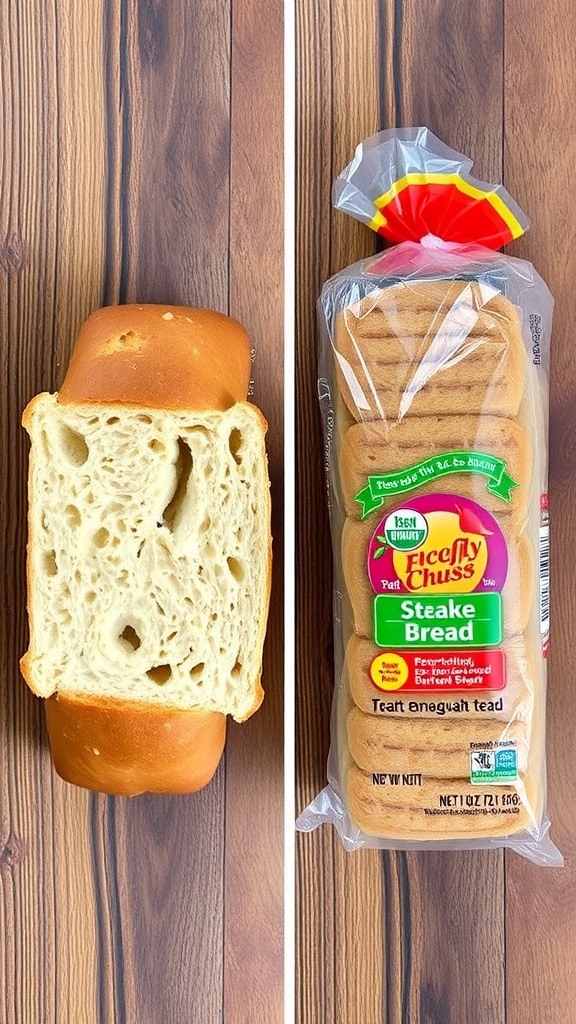
Homemade bread is typically made with simple ingredients and can be tailored to your dietary needs, while store-bought bread often contains preservatives and additives for extended freshness. The preparation time for homemade bread can be longer, but the resulting flavor and aroma are often unmatched.
Ingredients
- Flour
- Water
- Yeast
- Salt
- Optional ingredients for homemade: sugar, butter, herbs, seeds
Instructions
- Gather ingredients for homemade bread.
- Mix flour, water, yeast, and salt in a bowl.
- Knead the dough until smooth and elastic.
- Let the dough rise until doubled in size.
- Shape the dough and let it rise again before baking.
- Bake in a preheated oven until golden brown.
Cook and Prep Times
- Prep Time: 15 minutes
- Cook Time: 30 minutes
- Total Time: 1 hour 15 minutes
- Homemade Bread: {‘Calories’: ‘Approximately 80 calories per slice’, ‘Fat’: ‘1g’, ‘Protein’: ‘3g’, ‘Carbohydrates’: ’15g’}
- Store-Bought Bread: {‘Calories’: ‘Approximately 70-100 calories per slice’, ‘Fat’: ‘1-2g’, ‘Protein’: ‘2-4g’, ‘Carbohydrates’: ’12-20g’}