Sourdough bread is a traditional type of bread made through the fermentation of dough using naturally occurring lactobacilli and yeast. This method gives sourdough its distinctive tangy flavor and chewy texture.
There are many kinds of sourdough bread, each with unique characteristics based on ingredients, fermentation times, and baking techniques.
Understanding Sourdough Bread
Sourdough bread stands out in the world of baking due to its unique fermentation process.
This method utilizes naturally occurring lactobacilli and yeast, resulting in a bread that boasts a tangy flavor and chewy texture.
The combination of these elements creates a loaf that is not only delicious but also rich in history.
Different Types of Sourdough Bread
There are numerous varieties of sourdough bread, each with distinct characteristics influenced by ingredients and baking techniques.
For instance, San Francisco sourdough is famous for its pronounced sourness and crusty exterior, while whole wheat sourdough incorporates whole grain flour, adding nutritional value.
Rye sourdough, on the other hand, offers a denser texture and earthy flavor, making it a favorite among many bread enthusiasts.
Essential Ingredients for Sourdough
Creating a rustic loaf requires a few key ingredients.
All-purpose flour, whole wheat flour, and rye flour form the foundation of the dough, while water and salt enhance the flavor.
The star ingredient, however, is the sourdough starter, which is crucial for the fermentation process.
The Art of Making Sourdough
Making sourdough bread is a rewarding process that involves several steps.
First, the starter must be fed and allowed to become active.
Next, the dough is mixed, followed by a bulk fermentation period where it rises and develops flavor through stretch and folds.
Shaping and Baking the Loaf
Once the dough has doubled in size, it is shaped into a loaf.
This shaping process is essential for achieving the desired structure and crumb.
After a final proof, the loaf is ready for baking, often in a preheated Dutch oven to create steam, which contributes to a crispy crust.
Enjoying Your Sourdough Creation
Once baked, sourdough bread can be enjoyed in various ways.
Its soft, airy crumb pairs wonderfully with olive oil for dipping or can be served alongside fresh herbs for added flavor.
Whether enjoyed fresh or toasted, this rustic loaf is sure to impress anyone who takes a bite.
Different Types of Sourdough Bread
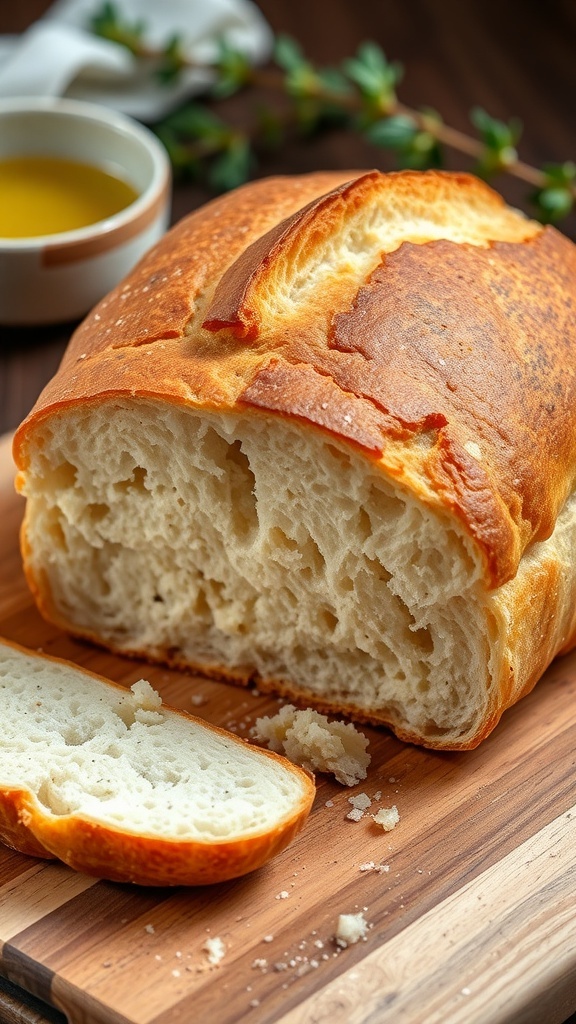
Some popular varieties include San Francisco sourdough, known for its sour flavor and crusty exterior; whole wheat sourdough, which incorporates whole grain flour for added nutrition; and rye sourdough, which uses rye flour for a denser texture and earthy flavor. Each type can be enjoyed fresh, toasted, or used in various recipes.
Ingredients
- All-purpose flour
- Whole wheat flour
- Rye flour
- Water
- Salt
- Sourdough starter
Instructions
- Prepare the Starter: Feed your sourdough starter with equal parts flour and water and let it sit until bubbly and active.
- Mix the Dough: Combine flour, water, and salt in a large bowl. Add the active starter and mix until a shaggy dough forms.
- Bulk Fermentation: Allow the dough to rise at room temperature for several hours, performing stretch and folds every 30 minutes.
- Shape the Dough: Once the dough has doubled in size, turn it out onto a floured surface and shape it into a round or oval loaf.
- Final Proof: Let the shaped dough rise again, either at room temperature or in the refrigerator for a longer fermentation.
- Preheat the Oven: Heat your oven to a high temperature, ideally with a Dutch oven inside for steam.
- Bake the Bread: Carefully transfer the dough into the preheated Dutch oven, cover, and bake. Remove the lid halfway through to achieve a crispy crust.
Cook and Prep Times
- Prep Time: 20 minutes
- Cook Time: 30-40 minutes
- Total Time: 4-12 hours (including fermentation)
- Servings: 1 loaf
- Calories: 120kcal per slice
- Fat: 1g
- Protein: 4g
- Carbohydrates: 24g