Have you ever found yourself questioning how you like your steak cooked? Understanding steak levels is crucial for any meat lover who wants to enjoy the perfect bite. From rare to well-done, each level of doneness offers a unique texture and flavor profile that can elevate your dining experience.
The doneness of steak is determined by its internal temperature, which affects its juiciness, tenderness, and overall taste. Whether you’re grilling at home or ordering at a restaurant, knowing the differences between these levels will help you make informed choices.
Understanding Steak Doneness Levels
When it comes to enjoying steak, knowing how you prefer it cooked is essential. The doneness of steak significantly impacts its flavor, tenderness, and juiciness.
Different levels of doneness appeal to various tastes, and understanding these can enhance your overall dining satisfaction. Whether it’s a casual gathering or a special occasion, the right doneness can elevate any meal.
The Different Levels of Steak Doneness
Steak can be prepared in multiple ways, allowing for a variety of flavors and textures. Each doneness level offers a unique experience, ranging from rare, with its cool red center, to well-done, featuring a firmer, gray appearance.
Medium-rare is a popular choice, celebrated for its warm red center that keeps the meat juicy and tender. This balance of flavor and texture makes it a favorite among steak enthusiasts.
Exploring the Doneness Spectrum
The range of steak doneness includes:
- Rare:125°F (52°C) – Cool red center, very juicy and tender.
- Medium Rare:135°F (57°C) – Warm red center, juicy and very tender.
- Medium:145°F (63°C) – Warm pink center, slightly firmer and less juicy.
- Medium Well:155°F (68°C) – Slightly pink center, firm and less juicy.
- Well Done:160°F (71°C) and above – Gray throughout, firm and dry.
Each level presents a distinct experience, catering to individual preferences. Selecting the right level can make all the difference in enjoying a steak meal.
Cooking Tips for Perfect Doneness
Achieving your desired steak doneness involves some mindful techniques. Using a meat thermometer can help ensure your steak reaches the perfect temperature.
After cooking, it’s beneficial to let your steak rest for at least five minutes. This step allows the juices to redistribute, resulting in a more flavorful bite.
Serving Suggestions for an Elegant Dining Experience
Pairing a beautifully grilled steak with sides can enhance the dining experience. Roasted vegetables complement the richness of the meat, adding both color and nutritional value.
To elevate the meal further, a glass of red wine can enhance the flavors of both the steak and the vegetables, creating a sophisticated atmosphere at your table.
Final Thoughts on Enjoying Steak
Understanding doneness levels and how to achieve them is key to enjoying steak to its fullest. Each level brings a unique flavor profile, allowing for a personalized dining experience.
Whether cooking at home or dining out, being informed about steak doneness can lead to more satisfying meals. Enjoying the perfect medium-rare steak, garnished with fresh herbs, served alongside roasted vegetables and a fine wine, creates a memorable culinary moment.
The Different Levels of Steak Doneness
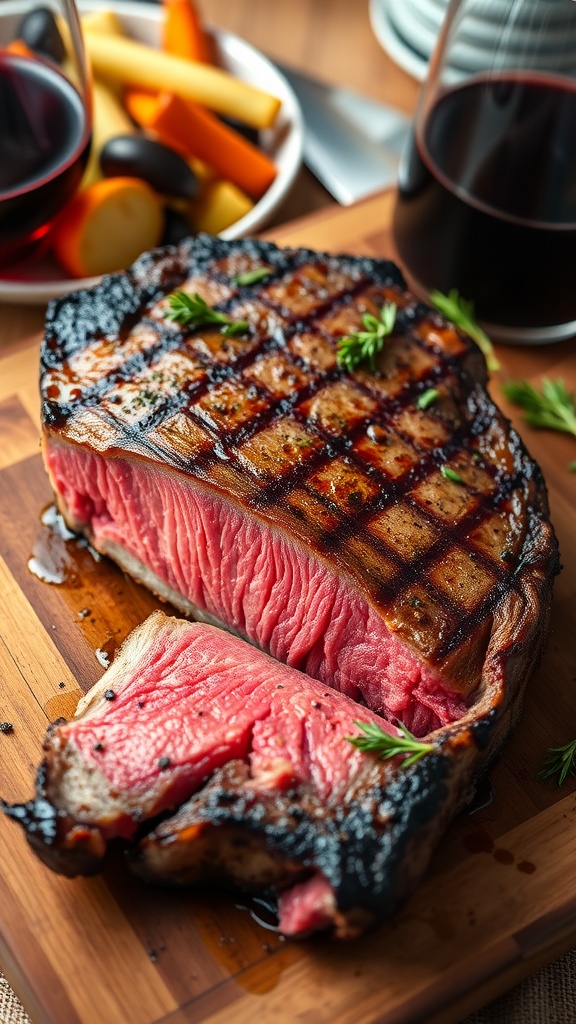
Steaks can be enjoyed at various levels of doneness, each producing a distinct taste and texture. Ranging from the cool red center of rare to the firm and grey texture of well-done, these levels can cater to anyone’s preference.
The best steaks often have a juicy, pink center, balancing flavor and tenderness, making medium-rare a favorite among enthusiasts.