This sourdough bread recipe incorporates various inclusions such as nuts, seeds, and dried fruits, enhancing the flavor and texture of the bread. The natural fermentation process of sourdough creates a tangy taste that pairs beautifully with the added ingredients.
Making sourdough bread requires patience and attention to detail, but the results are well worth the effort. This recipe is perfect for those looking to elevate their homemade bread with unique flavors.
Understanding Sourdough Bread
Sourdough bread stands out for its unique flavor profile, which is developed through a natural fermentation process. This method not only enhances the taste but also contributes to the bread’s characteristic chewy crust and airy crumb.
The inclusion of various ingredients like nuts and seeds adds complexity to the texture and flavor, making each bite a delightful experience.
Creating sourdough bread requires a commitment to the process, but the rewards are significant. The satisfaction of pulling a beautifully baked loaf from the oven is hard to match.
Artisan Elements of the Recipe
This recipe is centered around the idea of artisan bread-making, where quality ingredients and traditional techniques come together.
With a combination of bread flour, water, and an active sourdough starter, the foundation of the bread is established. The addition of salt and mixed inclusions elevates the loaf to a new level of deliciousness.
Choosing inclusions like walnuts, sunflower seeds, or dried fruits not only enhances the flavor but also adds visual appeal, showcasing a rustic charm.
The Fermentation Process
The fermentation stage is crucial in developing the sourdough’s signature tang.
After mixing the dough, a resting period known as autolyse allows the flour to absorb water, which aids in gluten development.
Following this, the dough undergoes bulk fermentation, where it rises and develops flavor. Stretching and folding the dough during this time helps build strength and structure.
Incorporating Inclusions
Once the dough has risen, it’s time to add the mixed inclusions.
Gently flattening the dough and folding in the nuts and seeds ensures they are evenly distributed without overworking the dough.
This step is vital for maintaining the airy crumb structure while enhancing the overall flavor profile of the bread.
Shaping and Proofing
Shaping the dough is an art in itself.
Turning the dough onto a floured surface and forming it into a round loaf requires a gentle touch to preserve the gas bubbles formed during fermentation.
Proofing the dough, whether at room temperature or in the refrigerator, allows for further flavor development and prepares it for baking.
Baking to Perfection
Preheating the oven with a Dutch oven inside creates an ideal environment for baking.
Transferring the dough into the hot Dutch oven ensures a steamy atmosphere, which helps achieve that coveted golden-brown crust.
After baking, letting the bread cool on a wire rack is essential to allow the crumb to set, making slicing easier and preserving the texture.
Artisan Sourdough Bread with Inclusions
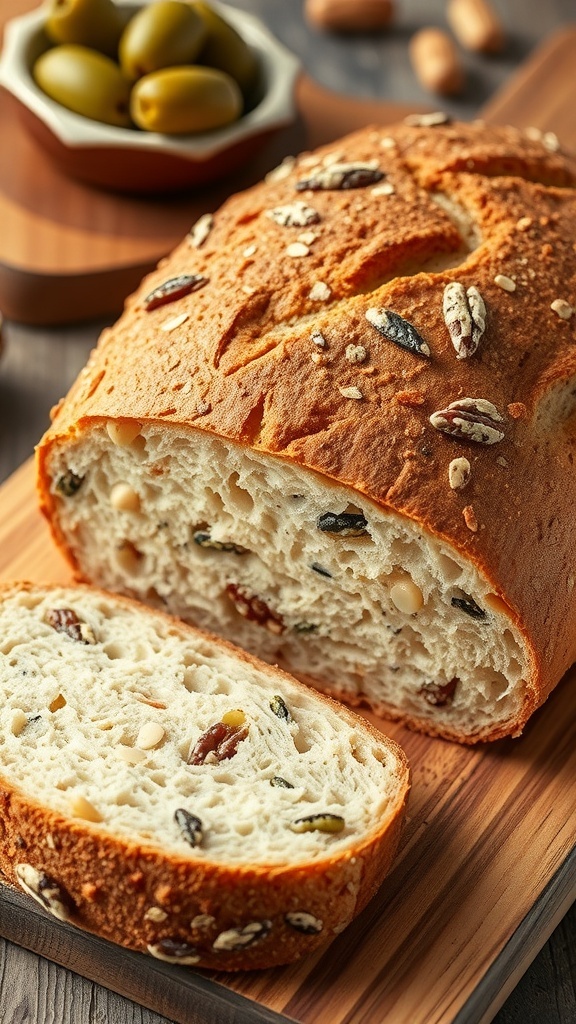
This sourdough bread features a chewy crust and a soft, airy crumb, enriched with your choice of inclusions. The recipe takes about 24 hours from start to finish, including fermentation time, and yields one large loaf.
Ingredients
- 500g bread flour
- 350g water at room temperature
- 100g active sourdough starter
- 10g salt
- 150g mixed inclusions (e.g., walnuts, sunflower seeds, dried cranberries, or olives)
Instructions
- Mix the Dough: In a large bowl, combine the bread flour and water. Mix until no dry flour remains. Let it rest for 30 minutes (autolyse).
- Add Starter and Salt: Add the active sourdough starter and salt to the dough. Mix until fully incorporated.
- Bulk Fermentation: Cover the bowl with a damp cloth and let the dough rise at room temperature for about 4 hours, performing stretch and folds every 30 minutes for the first 2 hours.
- Incorporate Inclusions: After the bulk fermentation, gently flatten the dough and sprinkle the mixed inclusions on top. Fold the dough over the inclusions and knead gently to incorporate them evenly.
- Shape the Dough: Turn the dough onto a lightly floured surface and shape it into a round loaf. Place it seam side up in a floured proofing basket.
- Final Proof: Cover the dough and let it proof for 2-4 hours at room temperature or overnight in the refrigerator for enhanced flavor.
- Preheat the Oven: About 30 minutes before baking, preheat your oven to 450°F (230°C) with a Dutch oven inside.
- Bake: Carefully transfer the dough to the preheated Dutch oven, cover with the lid, and bake for 30 minutes. Remove the lid and bake for an additional 15-20 minutes until golden brown.
- Cool: Let the bread cool on a wire rack for at least 1 hour before slicing.
Cook and Prep Times
- Prep Time: 30 minutes
- Cook Time: 45 minutes
- Total Time: 24 hours
- Servings: 1 loaf
- Calories: 150kcal per slice
- Fat: 3g
- Protein: 5g
- Carbohydrates: 28g