This sourdough bread recipe utilizes a 100g starter to create a flavorful and crusty loaf. The natural fermentation process enhances the bread’s texture and taste, making it a favorite among home bakers.
The recipe is straightforward and requires minimal ingredients. With a little patience, you can enjoy freshly baked sourdough bread right from your oven.
Understanding Sourdough Bread
Sourdough bread is a timeless staple, cherished for its unique flavor and texture. The natural fermentation process, driven by wild yeast and bacteria, gives this bread its characteristic tang and airy structure.
Unlike commercial yeast, sourdough relies on a starter, which is a mixture of flour and water that captures wild yeast from the environment. This starter not only leavens the bread but also contributes to its complex flavor profile.
The Art of Fermentation
Fermentation is the heart of sourdough baking. It begins with mixing the active starter with flour and water, creating a dough that requires time to develop. This resting phase, known as autolyse, allows the flour to fully hydrate, enhancing the dough’s extensibility.
As the dough ferments, it undergoes various transformations. The gluten develops strength, and the dough rises, creating those delightful air pockets that are a hallmark of sourdough. Stretching and folding during this phase helps to build structure while incorporating air.
Shaping and Proofing
Once the bulk fermentation is complete, shaping the dough is crucial. This step not only forms the loaf but also helps to create surface tension, which is essential for a good rise in the oven.
After shaping, the dough is placed in a proofing basket, where it undergoes final proofing. This can take several hours at room temperature or overnight in the refrigerator. The longer proofing time enhances the flavor and texture, resulting in a more complex loaf.
Baking Techniques
Preheating the oven with a Dutch oven inside is a key technique for achieving that perfect crust. The enclosed environment traps steam, which helps the bread rise and develop a crispy exterior.
Once the loaf is placed in the hot Dutch oven, it bakes covered for the first part of the process. This allows the bread to expand fully before the crust sets. Removing the lid for the final minutes ensures a beautiful golden-brown finish.
Cooling and Slicing
After baking, patience is essential. Allowing the bread to cool on a wire rack for at least an hour is vital for the crumb structure to set. Slicing too soon can result in a gummy texture.
Once cooled, the loaf reveals its airy, chewy interior, complete with the signature holes from fermentation. Each slice is a testament to the care and time invested in the baking process, perfect for enjoying with butter or as the base for a delicious sandwich.
Enjoying Your Sourdough
Sourdough bread is versatile and can be enjoyed in numerous ways. Whether toasted for breakfast, paired with soup, or used for sandwiches, its flavor and texture elevate any meal.
Sharing a freshly baked loaf with friends and family creates a warm atmosphere, making it an ideal centerpiece for gatherings. The rustic appearance and inviting aroma of sourdough bread are sure to impress anyone who experiences it.
Homemade Sourdough Bread Recipe
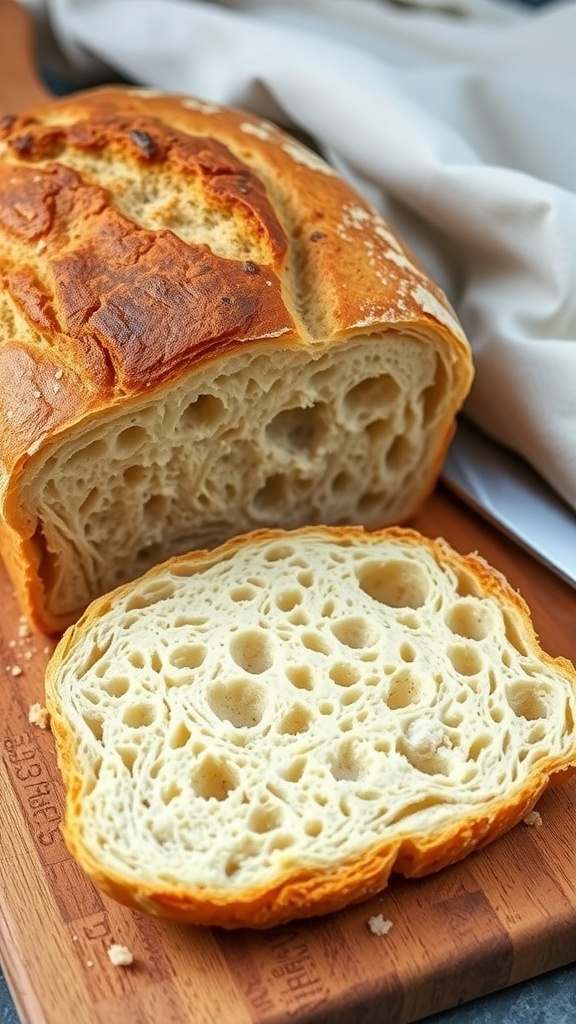
This sourdough bread features a crispy crust and a chewy interior, thanks to the fermentation from the starter. The process takes about 24 hours, including fermentation and baking time, and yields one large loaf.
Ingredients
- 100g active sourdough starter
- 400g all-purpose flour
- 300g water at room temperature
- 10g salt
Instructions
- Mix Ingredients: In a large bowl, combine the active sourdough starter, flour, and water. Mix until no dry flour remains.
- Autolyse: Let the mixture rest for 30 minutes to 1 hour to allow the flour to hydrate.
- Add Salt: Sprinkle the salt over the dough and mix it in with your hands until fully incorporated.
- Bulk Fermentation: Cover the bowl with a damp cloth and let it rise at room temperature for 4 to 6 hours, performing stretch and folds every 30 minutes for the first 2 hours.
- Shape the Dough: After bulk fermentation, turn the dough out onto a floured surface and shape it into a round or oval loaf.
- Final Proof: Place the shaped dough into a floured proofing basket and cover it. Let it proof for 2 to 4 hours at room temperature or overnight in the refrigerator.
- Preheat Oven: Preheat your oven to 450°F (230°C) with a Dutch oven inside for at least 30 minutes.
- Bake: Carefully transfer the dough into the preheated Dutch oven, cover it, and bake for 30 minutes. Remove the lid and bake for an additional 15-20 minutes until golden brown.
- Cool: Let the bread cool on a wire rack for at least an hour before slicing.
Cook and Prep Times
- Prep Time: 30 minutes
- Fermentation Time: 4-6 hours
- Proofing Time: 2-4 hours or overnight
- Bake Time: 45-50 minutes
- Total Time: 24 hours
- Servings: 1 loaf
- Calories: 250kcal per slice
- Fat: 1g
- Protein: 8g
- Carbohydrates: 50g