Sourdough bread is a traditional bread made through the fermentation of dough using naturally occurring lactobacilli and yeast. This process gives sourdough its distinctive tangy flavor and chewy texture.
Making sourdough bread requires a few essential ingredients and techniques, but the results are rewarding. With practice, you can master the art of sourdough baking at home.
Understanding Sourdough Bread
Sourdough bread stands out due to its unique fermentation process, utilizing naturally occurring lactobacilli and yeast. This method not only contributes to its signature tangy flavor but also results in a delightful chewy texture.
Creating sourdough bread involves a blend of science and art. With a few key ingredients and techniques, anyone can embark on this rewarding baking journey. Mastery comes with practice, leading to the creation of loaves that are both flavorful and satisfying.
Fundamentals of Sourdough Baking
The process of making sourdough bread includes several essential steps. It begins with preparing a starter, which is crucial for achieving the desired rise and flavor.
Mixing the dough follows, where flour and water come together to form a cohesive mixture. After a resting period, the active starter and salt are incorporated, setting the stage for fermentation.
The Art of Fermentation
Fermentation is a vital phase in sourdough baking. During this time, the dough undergoes significant changes, developing flavor and texture. Covering the bowl with a damp cloth allows the dough to rise at room temperature for several hours.
Performing stretch and folds during the first couple of hours enhances the dough’s strength, ensuring a well-structured loaf. This hands-on approach is essential for achieving the perfect crumb.
Shaping and Proofing
Once bulk fermentation is complete, shaping the dough is the next step. Turning it onto a lightly floured surface, bakers form it into a round loaf, allowing it to rest briefly.
The final shaping involves placing the dough seam-side up in a proofing basket. This stage is crucial for developing the loaf’s final structure and allows for a second rise, either at room temperature or in the fridge overnight.
Baking the Perfect Loaf
Preheating the oven is essential for achieving that coveted golden crust. A Dutch oven is often used to create a steamy environment, which helps the bread rise beautifully.
Scoring the top of the dough before baking not only adds an artistic touch but also controls how the bread expands in the oven. The transformation from dough to a beautifully baked loaf is a sight to behold.
Enjoying Your Sourdough Creation
After baking, allowing the bread to cool on a wire rack is important. This resting period ensures the crumb sets properly, making it easier to slice.
Sourdough bread is versatile, perfect for sandwiches, toasting, or simply enjoying with a pat of butter. Each slice reveals the airy, chewy interior, a testament to the time and care put into the baking process.
Fundamentals of Sourdough Bread
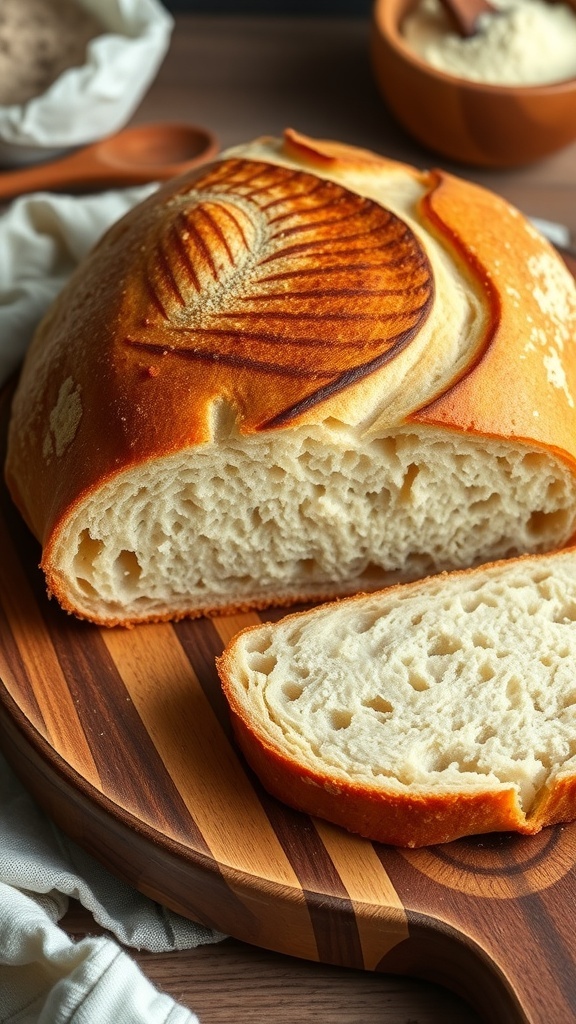
This sourdough bread recipe involves creating a starter, mixing the dough, and allowing it to rise before baking. The process takes time, but the end result is a crusty, flavorful loaf that is perfect for sandwiches or toasting.
Ingredients
- 500g bread flour
- 350g water (room temperature)
- 100g active sourdough starter
- 10g salt
Instructions
- Prepare the Starter: Feed your sourdough starter 4-6 hours before you plan to make the bread to ensure it is active and bubbly.
- Mix the Dough: In a large bowl, combine the bread flour and water. Mix until no dry flour remains. Let it rest for 30 minutes (autolyse).
- Add Starter and Salt: Add the active sourdough starter and salt to the dough. Mix well until fully incorporated.
- Bulk Fermentation: Cover the bowl with a damp cloth and let it rise at room temperature for 4-6 hours, performing stretch and folds every 30 minutes for the first 2 hours.
- Shape the Dough: After bulk fermentation, turn the dough onto a lightly floured surface and shape it into a round loaf. Let it rest for 20 minutes.
- Final Shape: Shape the dough again and place it seam-side up in a floured proofing basket. Cover and let it rise for 2-4 hours at room temperature or overnight in the fridge.
- Preheat the Oven: Preheat your oven to 450°F (232°C) with a Dutch oven inside for at least 30 minutes.
- Bake the Bread: Carefully transfer the dough to the preheated Dutch oven, score the top with a sharp knife, and cover with the lid. Bake for 30 minutes covered, then remove the lid and bake for an additional 15-20 minutes until golden brown.
- Cool: Remove the bread from the oven and let it cool on a wire rack for at least an hour before slicing.
Cook and Prep Times
- Prep Time: 30 minutes
- Cook Time: 45 minutes
- Total Time: 6-12 hours (including fermentation)
- Servings: 1 loaf
- Calories: 120kcal per slice
- Fat: 0.5g
- Protein: 4g
- Carbohydrates: 25g