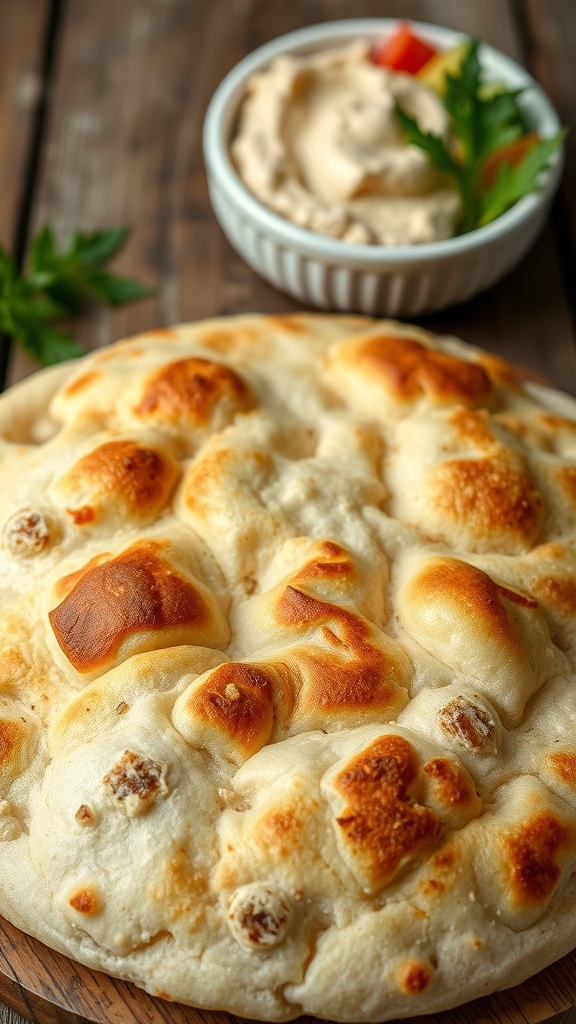
Pita bread is a popular Middle Eastern flatbread known for its unique pocket that can be filled with various ingredients. It is made from simple ingredients like flour, water, yeast, and salt, making it a versatile choice for many dishes.
Understanding the nutrition facts of pita bread can help you make informed dietary choices. It is often used in wraps, sandwiches, or served with dips like hummus.
Understanding Pita Bread
Pita bread is a cherished staple in many cuisines, particularly in the Middle East. Its unique pocket feature makes it an excellent choice for various fillings, allowing for endless culinary creativity.
This flatbread is crafted from a handful of simple ingredients: flour, water, yeast, and salt. The combination creates a soft, fluffy texture that is both satisfying and versatile.
Nutritional Information of Pita Bread
A typical serving of pita bread, weighing around 60 grams, contains approximately 165 calories. This makes it a relatively low-calorie option for those looking to enjoy bread without excessive caloric intake.
In terms of macronutrients, pita bread is primarily composed of carbohydrates, providing about 35 grams per serving. It is low in fat, usually containing less than 1 gram, making it a heart-healthy choice.
Health Benefits of Pita Bread
Pita bread offers several health benefits, particularly due to its nutritional profile. With around 6 grams of protein per serving, it can contribute to daily protein needs, especially when paired with protein-rich fillings.
Moreover, pita bread contains dietary fiber, with about 2 grams per serving. This can aid in digestion and promote a feeling of fullness, which is beneficial for those managing their weight.
Ways to Enjoy Pita Bread
The versatility of pita bread is one of its most appealing aspects. It can be used as a wrap for sandwiches, a base for pizzas, or simply served alongside dips like hummus.
Stuffing pita pockets with fresh vegetables, meats, or spreads allows for a delightful combination of flavors and textures. The soft interior of the pita complements crunchy veggies and creamy dips perfectly.
Serving Suggestions
When serving pita bread, consider pairing it with a bowl of hummus and an assortment of fresh vegetables. This not only enhances the meal’s nutritional value but also adds vibrant colors to the presentation.
For a heartier option, fill the pita with grilled chicken, falafel, or roasted vegetables. The possibilities are endless, making it a favorite among both casual eaters and gourmet chefs.
Storing Pita Bread
To maintain the freshness of pita bread, store it in a cool, dry place. For longer shelf life, consider freezing it. When ready to use, simply thaw and warm it up for that freshly baked taste.
Keeping pita bread in an airtight container can help retain its soft texture, ensuring that each bite remains enjoyable.
Nutritional Information of Pita Bread
A typical serving of pita bread (about 60 grams or one medium-sized pita) contains approximately 165 calories. It provides a good source of carbohydrates, with around 35 grams per serving, and is low in fat, usually containing less than 1 gram. Pita bread is also a source of protein, offering about 6 grams per serving.