This no Dutch oven sourdough bread recipe allows you to bake delicious, crusty bread without the need for specialized equipment. Using a simple baking sheet, you can achieve a beautiful loaf with a crispy crust and soft interior.
The process involves creating a sourdough starter, mixing the dough, and baking it in your oven. This method is accessible for home bakers looking to enjoy homemade sourdough.
Creating the Perfect Sourdough Starter
A successful sourdough loaf begins with a robust starter. This living culture of flour and water is what gives sourdough its characteristic tang and texture.
To create your starter, combine equal parts of flour and water in a jar. Stir well and let it sit at room temperature, feeding it daily with more flour and water. After about 5 to 7 days, you should notice bubbles forming, indicating that fermentation is taking place.
Once your starter is bubbly and has doubled in size, it’s ready to be used in your bread recipe. This essential step sets the foundation for a delightful loaf.
The Art of Mixing Dough
Mixing the dough is a crucial step that influences the texture of your bread. Start by combining the flour and water in a large bowl.
Stir until no dry flour remains, then let the mixture rest for about 30 minutes. This resting period, known as autolyse, allows the flour to absorb water and begin gluten development, which is vital for a chewy crust and airy crumb.
Bulk Fermentation: Patience is Key
After mixing, it’s time for bulk fermentation. Cover your bowl with a damp cloth and let it rise at room temperature for 4 to 6 hours.
During this time, perform stretch and folds every 30 minutes for the first two hours. This technique helps to strengthen the dough and improve its structure. The dough should become puffy and increase in volume, indicating that fermentation is progressing well.
Shaping Your Loaf
Once bulk fermentation is complete, it’s time to shape your dough. Turn it out onto a lightly floured surface and gently shape it into a round loaf.
Place the loaf seam side down in a floured proofing basket or bowl. Cover it and let it proof for 1 to 2 hours at room temperature, or for a more developed flavor, refrigerate it overnight. This final proofing allows the dough to relax and develop its flavor.
Baking to Perfection
Preheat your oven to 450°F (230°C) at least 30 minutes before baking. This ensures that your bread will have a nice rise and a crispy crust.
Carefully transfer your loaf onto a baking sheet lined with parchment paper. Score the top with a sharp knife to allow steam to escape during baking.
Bake for 30 to 35 minutes until the crust is golden brown and the internal temperature reaches 200°F (93°C). The aroma of freshly baked bread will fill your kitchen, creating a cozy atmosphere.
Cooling and Slicing
After baking, let your bread cool on a wire rack for at least an hour before slicing. This cooling period allows the crumb to set properly, ensuring a soft and airy interior.
Once cooled, slice into your beautifully baked loaf and enjoy the fruits of your labor. The rustic appearance and delightful texture make it perfect for sandwiches, toast, or simply enjoyed with butter.
Homemade Sourdough Bread Without a Dutch Oven
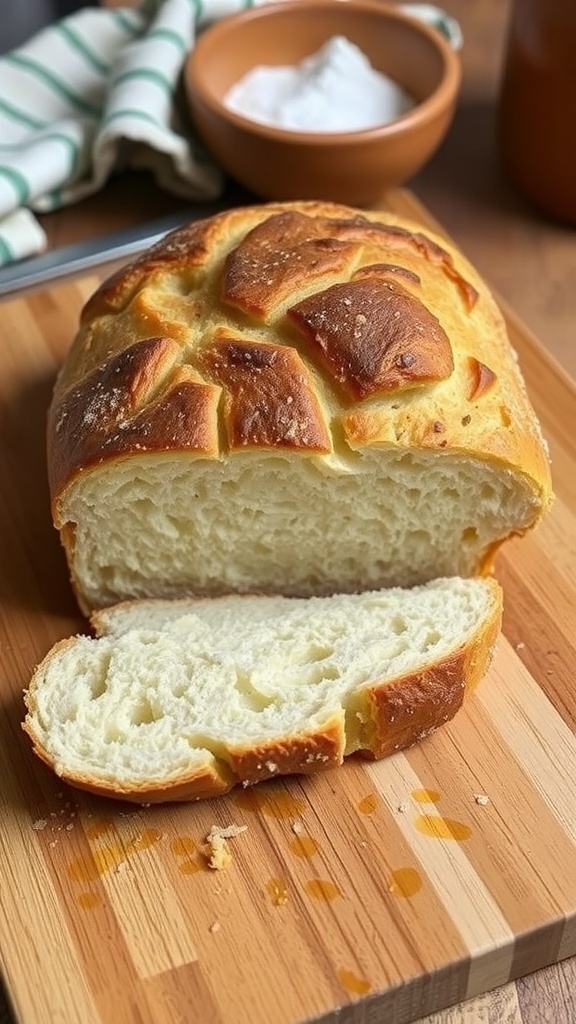
This sourdough bread recipe yields a rustic loaf with a chewy crust and airy crumb. The total time from start to finish is approximately 24 hours, including fermentation, and it serves about 8 slices.
Ingredients
- 500g all-purpose flour
- 350g water at room temperature
- 100g active sourdough starter
- 10g salt
Instructions
- Mix the Dough: In a large bowl, combine the flour and water. Stir until no dry flour remains. Let it rest for 30 minutes (autolyse).
- Add Starter and Salt: Add the active sourdough starter and salt to the dough. Mix until fully incorporated.
- Bulk Fermentation: Cover the bowl with a damp cloth and let it rise at room temperature for about 4-6 hours, performing stretch and folds every 30 minutes for the first 2 hours.
- Shape the Dough: After bulk fermentation, turn the dough onto a lightly floured surface. Shape it into a round loaf, then place it seam side down in a floured proofing basket or bowl.
- Final Proof: Cover the loaf and let it proof for 1-2 hours at room temperature, or overnight in the refrigerator for a more developed flavor.
- Preheat the Oven: Preheat your oven to 450°F (230°C) for at least 30 minutes before baking.
- Bake the Bread: Carefully transfer the loaf onto a baking sheet lined with parchment paper. Score the top with a sharp knife. Bake for 30-35 minutes until golden brown and the internal temperature reaches 200°F (93°C).
- Cool: Let the bread cool on a wire rack for at least 1 hour before slicing.
Cook and Prep Times
- Prep Time: 30 minutes
- Cook Time: 35 minutes
- Total Time: 24 hours
- Servings: 8 slices
- Calories: 150kcal
- Fat: 0.5g
- Protein: 4g
- Carbohydrates: 30g