This sourdough bread recipe utilizes all-purpose flour to create a deliciously tangy loaf with a crisp crust and soft interior. Perfect for sandwiches or toasting, this bread is a staple for any home baker.
The process involves creating a sourdough starter, allowing for natural fermentation, and then baking the bread. With a little patience, you can achieve a beautiful loaf with minimal ingredients.
Understanding Sourdough Bread
Sourdough bread is a unique creation that relies on natural fermentation, giving it a distinct flavor profile and texture. The process begins with a sourdough starter, which is a mixture of flour and water that captures wild yeast and bacteria from the environment. This starter is the heart of sourdough, providing the necessary leavening and tangy taste.
The beauty of sourdough lies in its simplicity. With just a few ingredients—flour, water, salt, and the starter—you can produce a loaf that is both satisfying and versatile. The fermentation process not only enhances the flavor but also contributes to the bread’s airy crumb structure, making each slice a delight.
The Art of Fermentation
Fermentation is a critical step in sourdough bread making. It involves allowing the dough to rise slowly, which develops its flavor and texture. The first rise, or bulk fermentation, typically lasts several hours, during which the dough doubles in size. This stage is essential for building the gluten structure that gives the bread its characteristic chewiness.
After the first rise, the dough is shaped and allowed to rise again, either at room temperature or in the refrigerator for a slower fermentation. This second rise, known as proofing, further enhances the flavor and texture, resulting in a loaf that is light and airy.
Key Ingredients for Success
The primary ingredients in sourdough bread are all-purpose flour, water, salt, and an active sourdough starter. Each component plays a vital role in the final product. All-purpose flour provides the necessary structure, while water hydrates the flour and activates the gluten.
Salt is not just for flavor; it also regulates yeast activity and strengthens the dough. The sourdough starter, being the source of natural yeast, is what sets this bread apart from others. It’s essential to ensure that the starter is active and bubbly before beginning the bread-making process.
Perfecting the Crust and Crumb
The crust of sourdough bread is often a point of admiration. Achieving that golden-brown exterior requires proper baking techniques. Preheating a Dutch oven creates a steamy environment that helps the bread rise and develop a crispy crust.
Inside, the open crumb structure is a hallmark of well-made sourdough. This airy texture is achieved through careful kneading and fermentation. The bubbles formed during fermentation create pockets of air, resulting in a light and fluffy interior that contrasts beautifully with the crust.
Tips for Home Bakers
For those new to sourdough, patience is key. The process can take time, but the results are worth the wait. Start by ensuring your sourdough starter is healthy and active. Feed it regularly and give it time to develop before using it in your bread.
Don’t be afraid to experiment with different hydration levels and flour types. Each variation can lead to unique flavors and textures. Keep notes on your process to refine your technique over time, and soon you’ll be baking loaves that impress family and friends.
Enjoying Your Sourdough
Once your sourdough bread is baked and cooled, the possibilities are endless. Enjoy it fresh with a spread of butter, use it for sandwiches, or toast it for breakfast. The tangy flavor pairs well with a variety of toppings, making it a versatile addition to any meal.
Sharing a loaf with loved ones can be a rewarding experience, as homemade bread often brings people together. Whether it’s a casual breakfast or a special occasion, your homemade sourdough will surely be a highlight.
Simple Sourdough Bread Recipe
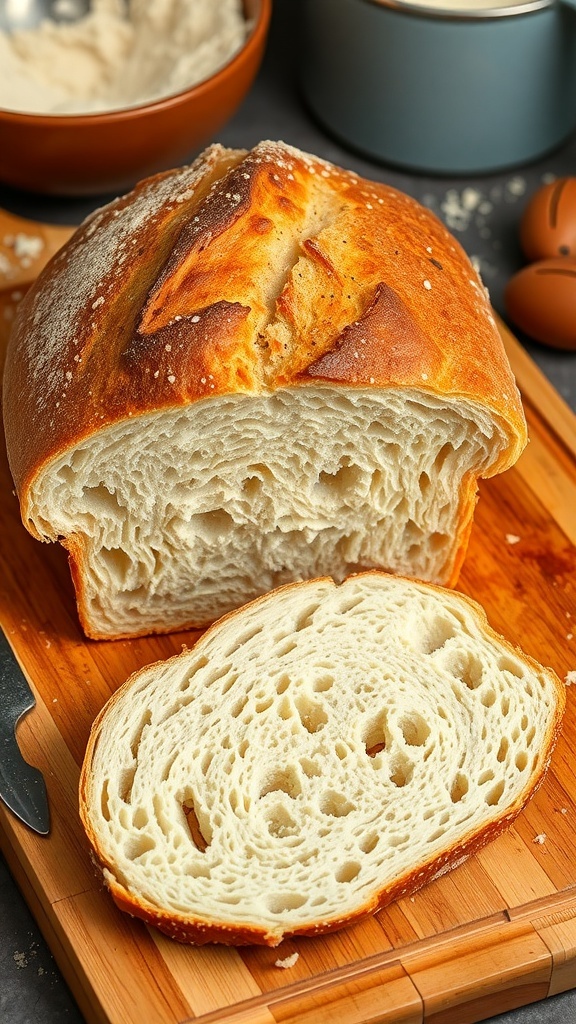
This sourdough bread is made with a simple mixture of all-purpose flour, water, and salt, along with a sourdough starter. The total time for this recipe is approximately 24 hours, including fermentation and baking, and it yields one large loaf.
Ingredients
- 1 cup active sourdough starter
- 1 1/2 cups warm water
- 4 cups all-purpose flour
- 1 1/2 teaspoons salt
Instructions
- Prepare the Starter: Feed your sourdough starter about 4-6 hours before starting the bread to ensure it is active and bubbly.
- Mix Ingredients: In a large bowl, combine the active sourdough starter, warm water, and salt. Gradually add the all-purpose flour, mixing until a shaggy dough forms.
- Knead the Dough: Turn the dough onto a floured surface and knead for about 10 minutes until smooth and elastic.
- First Rise: Place the dough in a lightly greased bowl, cover it with a damp cloth, and let it rise at room temperature for 4-6 hours, or until doubled in size.
- Shape the Dough: Once risen, gently deflate the dough and shape it into a round loaf. Place it seam-side down in a floured proofing basket or bowl.
- Second Rise: Cover the dough and let it rise for another 2-3 hours at room temperature or overnight in the refrigerator for a slower fermentation.
- Preheat the Oven: About 30 minutes before baking, preheat your oven to 450°F (230°C) with a Dutch oven inside.
- Bake the Bread: Carefully transfer the dough to the preheated Dutch oven, cover it, and bake for 30 minutes. Remove the lid and bake for an additional 15-20 minutes until golden brown.
- Cool: Once baked, remove the bread from the oven and let it cool on a wire rack before slicing.
Cook and Prep Times
- Prep Time: 30 minutes
- Cook Time: 45 minutes
- Total Time: 24 hours
- Servings: 1 large loaf
- Calories: 120kcal per slice
- Fat: 0.5g
- Protein: 3g
- Carbohydrates: 25g