This homemade sourdough bread is a delicious and tangy loaf with a crispy crust and soft, airy interior. Made with just a few simple ingredients, it requires a sourdough starter for fermentation, which gives the bread its unique flavor.
The process involves mixing, kneading, and allowing the dough to rise over several hours. With some patience and practice, you can achieve bakery-quality bread right in your own kitchen.
The Art of Sourdough Bread Baking
Baking sourdough bread is a rewarding experience that combines science and creativity.
The process begins with a sourdough starter, which is a mixture of flour and water that captures wild yeast and bacteria from the environment.
This starter is essential for fermentation, giving the bread its distinctive flavor and texture.
Understanding the fermentation process is key.
As the dough rises, the wild yeast ferments the sugars in the flour, producing carbon dioxide.
This gas creates the airy structure that is characteristic of a well-made sourdough loaf.
Ingredients for Success
The beauty of sourdough lies in its simplicity.
With just four main ingredients—flour, water, sourdough starter, and salt—you can create a loaf that rivals those from artisan bakeries.
Using high-quality flour can significantly enhance the flavor and texture of the bread.
Water temperature is also important; room temperature water helps to activate the starter effectively.
Salt, while a small addition, plays a crucial role in flavor and dough strength.
Mastering the Dough
Mixing the dough is the first step in the baking process.
Combining flour and water until no dry bits remain sets the stage for the autolyse phase, where the dough rests and hydrates.
This resting period allows the flour to absorb water fully, improving gluten development.
After the autolyse, adding the sourdough starter and salt is essential.
Kneading the dough for about ten minutes helps develop the gluten structure, which is vital for achieving that perfect rise.
Fermentation and Shaping
Bulk fermentation is where the magic happens.
During this phase, the dough should be placed in a lightly greased bowl and covered to retain moisture.
Stretching and folding the dough every hour encourages strength and elasticity.
Once the dough has doubled in size, it’s time to shape it.
Turning the dough onto a floured surface and forming it into a round loaf prepares it for its final proofing stage.
This step is crucial for developing the loaf’s final shape and texture.
Baking to Perfection
Preheating the oven with a Dutch oven inside is an important step that creates a steamy environment for baking.
This steam helps achieve a crispy crust while allowing the bread to rise beautifully.
When the dough is placed in the hot Dutch oven, it should be covered for the first half of the baking time.
Removing the lid later allows the crust to brown and develop that signature golden hue.
The Joy of Sourdough
Once baked, allowing the bread to cool on a wire rack is essential.
This cooling period lets the crumb set properly, ensuring a perfect slice.
Cutting into the loaf too soon can result in a gummy texture.
Enjoying a slice of freshly baked sourdough, with its airy crumb and crispy crust, is a delightful experience.
Whether enjoyed plain or with your favorite toppings, homemade sourdough bread is a true testament to the art of baking.
Easy Sourdough Bread Recipe
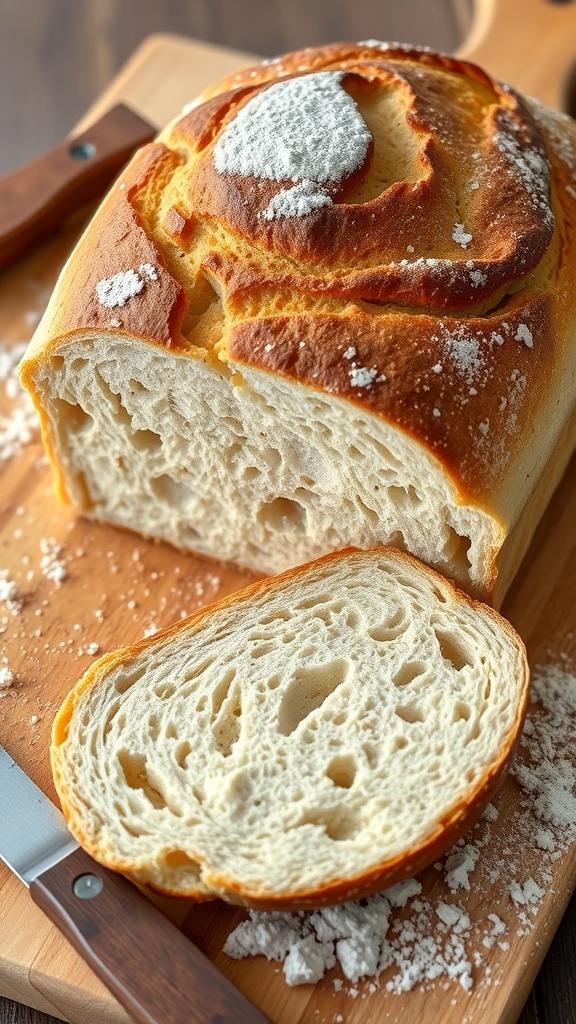
This sourdough bread recipe yields a rustic loaf with a chewy texture and a slightly sour taste. The total time for preparation and baking is approximately 24 hours, including fermentation, and it serves about 10 slices.
Ingredients
- 500g all-purpose flour
- 350g water (room temperature)
- 100g active sourdough starter
- 10g salt
Instructions
- Mix the Dough: In a large bowl, combine the flour and water. Mix until no dry flour remains. Let it rest for 30 minutes (autolyse).
- Add Starter and Salt: Add the sourdough starter and salt to the dough. Mix until fully incorporated.
- Knead the Dough: Turn the dough onto a floured surface and knead for about 10 minutes until smooth and elastic.
- Bulk Fermentation: Place the dough in a lightly greased bowl, cover it, and let it rise at room temperature for 4-6 hours, or until it has doubled in size. Stretch and fold the dough every hour during this time.
- Shape the Dough: Turn the dough out onto a floured surface, shape it into a round loaf, and place it seam-side down in a floured proofing basket.
- Final Proof: Cover the dough and let it proof for 2-4 hours at room temperature or overnight in the refrigerator for a slower fermentation.
- Preheat the Oven: About 30 minutes before baking, preheat your oven to 450°F (232°C) with a Dutch oven inside.
- Bake the Bread: Carefully transfer the dough to the hot Dutch oven, cover it, and bake for 30 minutes. Remove the lid and bake for an additional 15-20 minutes until golden brown.
- Cool: Remove the bread from the oven and let it cool on a wire rack for at least an hour before slicing.
Cook and Prep Times
- Prep Time: 30 minutes
- Cook Time: 45 minutes
- Total Time: 24 hours (including fermentation)
- Servings: 10 slices
- Calories: 150kcal per slice
- Fat: 0.5g
- Protein: 4g
- Carbohydrates: 30g