This homemade sourdough bread features a crispy crust and a soft, chewy interior. Utilizing a sourdough starter, this recipe allows for a natural fermentation process that enhances the flavor and texture of the bread.
The process requires some patience, but the results are well worth the effort. With just a few simple ingredients, you can create a delicious loaf that is perfect for sandwiches, toasting, or enjoying with butter.
The Art of Sourdough Bread Making
Sourdough bread is not just a food item; it represents a tradition that has been passed down through generations. The process of making sourdough involves natural fermentation, which gives the bread its unique flavor and texture.
Creating a loaf of sourdough requires a bit of time and patience, but the rewards are significant. The crispy crust and soft, chewy interior make it a favorite among bread enthusiasts.
With a few simple ingredients, you can transform your kitchen into a bakery, producing a loaf that is perfect for sandwiches, toasting, or simply enjoying with a pat of butter.
Ingredients for Success
The foundation of any great sourdough bread lies in its ingredients. For a basic loaf, you will need bread flour, water, an active sourdough starter, and salt.
Each component plays a vital role in the final product. The flour provides structure, while the water hydrates the dough, allowing for proper fermentation. The sourdough starter introduces natural yeast and bacteria, which are essential for leavening the bread.
Salt not only enhances flavor but also strengthens the dough, contributing to its overall texture.
The Fermentation Process
Fermentation is a key step in sourdough bread making. It begins with mixing the flour and water, followed by a resting period known as autolyse. This allows the flour to fully hydrate, making it easier to work with.
After the initial rest, the sourdough starter and salt are added. The dough then undergoes bulk fermentation, where it rises and develops flavor.
During this time, performing stretch and folds helps build strength in the dough, ensuring a good rise when baked.
Shaping and Proofing
Once the dough has fermented, it’s time to shape it. Turning it out onto a floured surface allows you to form it into a round loaf.
After a short resting period, the dough is shaped again, this time more tightly, and placed in a proofing basket.
The proofing stage can take several hours at room temperature or overnight in the refrigerator, allowing the flavors to deepen and the dough to rise further.
Baking to Perfection
Preheating the oven is crucial for achieving that perfect crust. A Dutch oven is often used to create steam, which helps the bread rise and develop a beautiful golden-brown crust.
Once the oven is hot, carefully place the dough inside, cover it, and let it bake. The initial covered baking traps steam, while the final uncovered baking allows the crust to crisp up.
After about 45 minutes in total, the bread should emerge with a stunning crust and a warm, inviting aroma.
Cooling and Enjoying
After baking, it’s essential to let the bread cool completely on a wire rack. This cooling period allows the interior to set properly, making slicing easier.
Once cooled, the bread can be sliced and enjoyed in various ways. Whether you prefer it plain, toasted, or with a spread of butter, each bite is a testament to the time and effort put into making it.
Homemade sourdough bread not only nourishes the body but also warms the soul.
Easy Sourdough Bread Recipe
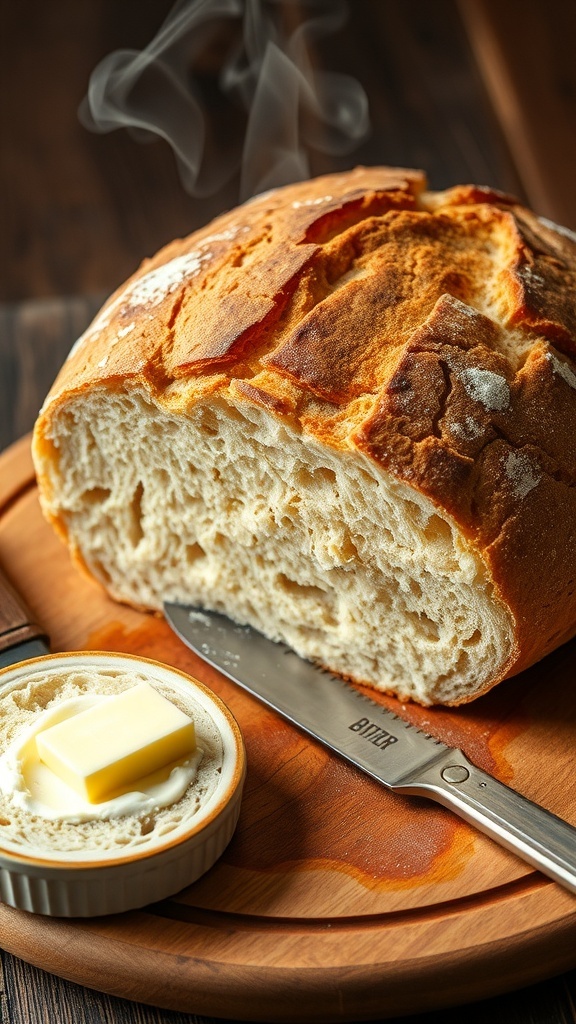
This sourdough bread recipe takes about 24 hours from start to finish, including the fermentation time. It yields one large loaf that serves 8 people.
Ingredients
- 500g bread flour
- 350g water at room temperature
- 100g active sourdough starter
- 10g salt
Instructions
- Mix the Dough: In a large bowl, combine the bread flour and water. Mix until no dry flour remains. Let it rest for 30 minutes (autolyse).
- Add Starter and Salt: Add the active sourdough starter and salt to the dough. Mix until fully incorporated.
- Bulk Fermentation: Cover the bowl with a damp cloth and let it rise at room temperature for about 4 hours, performing stretch and folds every 30 minutes for the first 2 hours.
- Shape the Dough: After bulk fermentation, turn the dough out onto a lightly floured surface. Shape it into a round loaf and let it rest for 20 minutes.
- Final Shape: Shape the dough again into a tighter round and place it seam side up in a floured proofing basket. Cover and let it proof for 2-4 hours at room temperature or overnight in the refrigerator.
- Preheat the Oven: About 30 minutes before baking, preheat your oven to 450°F (230°C) with a Dutch oven inside.
- Bake the Bread: Carefully remove the hot Dutch oven from the oven. Place the dough inside, cover with the lid, and bake for 30 minutes. Remove the lid and bake for an additional 15-20 minutes until golden brown.
- Cool: Transfer the bread to a wire rack and let it cool completely before slicing.
Cook and Prep Times
- Prep Time: 30 minutes
- Cook Time: 45 minutes
- Total Time: 24 hours
- Servings: 8 slices
- Calories: 150kcal
- Fat: 0.5g
- Protein: 5g
- Carbohydrates: 30g