This high hydration sourdough bread recipe results in a crusty exterior and an open crumb structure, making it a favorite among bread enthusiasts. The increased water content enhances the flavor and texture, creating a delicious loaf.
The process requires a bit of patience, as the dough needs to be handled gently, but the results are well worth the effort. This recipe is perfect for those looking to elevate their sourdough baking skills.
Understanding High Hydration Sourdough Bread
High hydration sourdough bread is a delightful creation that stands out for its unique texture and flavor. With a hydration level around 75%, this bread boasts an airy crumb and a chewy crust that many bread lovers seek.
The process of making this bread requires time and care, but the results are rewarding. The high water content not only enhances the flavor but also contributes to the bread’s signature open structure, making each slice a treat.
The Art of Sourdough Fermentation
Fermentation plays a pivotal role in developing the character of high hydration sourdough. The dough undergoes a lengthy fermentation process, typically lasting around 24 hours, which includes both bulk fermentation and proofing stages.
During bulk fermentation, the dough is allowed to rise at room temperature, with periodic stretch and folds to strengthen its structure. This technique helps create the desired texture while allowing the natural flavors to develop fully.
Shaping and Proofing Techniques
Shaping the dough is a crucial step that influences the final loaf’s appearance and texture. After the initial fermentation, the dough is gently turned out onto a floured surface and pre-shaped into a round. This step is essential for creating tension in the dough.
Following pre-shaping, the dough undergoes a final proofing period, either at room temperature or in the refrigerator overnight. This allows the flavors to deepen and the dough to rise further, preparing it for baking.
Baking to Perfection
When it comes to baking, preheating the oven is vital for achieving that perfect crust. A Dutch oven is often used to create a steamy environment, which helps the bread rise and develop a beautifully crusty exterior.
Once the dough is ready, it is carefully scored and placed into the hot Dutch oven. The initial covered baking phase traps steam, while the final uncovered phase allows the crust to turn golden brown and crisp.
Serving Suggestions and Pairings
High hydration sourdough bread is versatile and can be enjoyed in various ways. Slicing into the loaf reveals its airy crumb, making it perfect for sandwiches or simply enjoyed with a drizzle of olive oil and balsamic vinegar.
For a delightful experience, serve the bread alongside a selection of cheeses or charcuterie. The chewy texture and complex flavors of the sourdough complement a wide range of accompaniments, enhancing any meal.
Storing and Enjoying Your Bread
To maintain the freshness of your high hydration sourdough, it’s best to store it in a paper bag or wrapped in a clean kitchen towel. This helps retain the crust’s crispness while preventing the bread from becoming too dry.
For longer storage, consider freezing slices. This way, you can enjoy a piece of freshly baked bread whenever you desire, simply by toasting or warming it up.
Artisan High Hydration Sourdough Bread
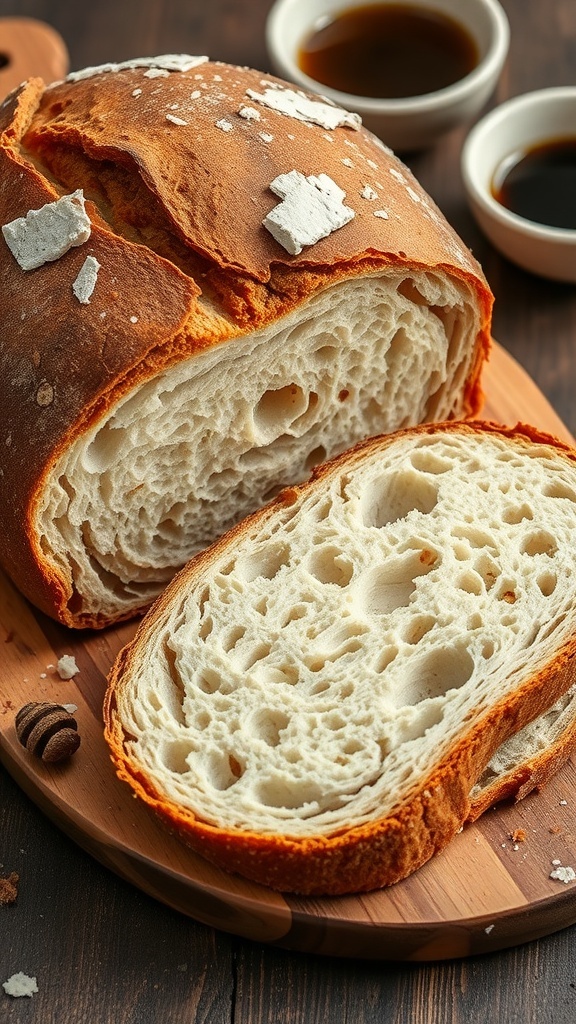
This sourdough bread features a hydration level of around 75%, which contributes to its airy texture and chewy crust. The recipe takes approximately 24 hours from start to finish, including fermentation and proofing time, and yields one large loaf.
Ingredients
- 500g bread flour
- 375g water (75% hydration)
- 100g active sourdough starter
- 10g salt
Instructions
- Mix the Dough: In a large bowl, combine the bread flour and water. Mix until no dry flour remains. Let it rest for 30 minutes (autolyse).
- Add Starter and Salt: After the autolyse, add the active sourdough starter and salt. Mix until fully incorporated.
- Bulk Fermentation: Cover the bowl and let the dough rise at room temperature for about 4-5 hours, performing stretch and folds every 30 minutes for the first 2 hours.
- Pre-shape: After bulk fermentation, gently turn the dough out onto a floured surface and pre-shape it into a round. Let it rest for 20-30 minutes.
- Final Shape: Shape the dough into a tight round or oval loaf, depending on your preference. Place it seam side up in a well-floured proofing basket.
- Final Proof: Cover and let the dough proof for 2-4 hours at room temperature or overnight in the refrigerator.
- Preheat Oven: Preheat your oven to 450°F (230°C) with a Dutch oven inside for at least 30 minutes.
- Score and Bake: Carefully turn the dough out onto parchment paper, score the top with a sharp blade, and transfer it to the hot Dutch oven. Cover and bake for 30 minutes, then uncover and bake for an additional 15-20 minutes until golden brown.
- Cool: Remove the bread from the oven and let it cool on a wire rack for at least an hour before slicing.
Cook and Prep Times
- Prep Time: 30 minutes
- Cook Time: 45 minutes
- Total Time: 24 hours
- Servings: 1 large loaf
- Calories: 150kcal per slice
- Fat: 0.5g
- Protein: 5g
- Carbohydrates: 30g