Baking sourdough bread at high altitude requires some adjustments to ensure the best results. The lower air pressure can affect the fermentation and rising process, making it essential to modify the ingredients and techniques used.
This recipe provides a straightforward approach to creating a delicious sourdough loaf that rises beautifully and has a great texture, even at higher elevations.
The Art of Sourdough Baking
Baking sourdough bread is a rewarding experience that combines science and creativity. The process begins with a sourdough starter, a living culture of flour and water that ferments over time. This starter is the heart of your bread, providing flavor and leavening power.
At high altitudes, the baking process can be a bit tricky. Lower air pressure affects how the dough rises and ferments. Adjusting your recipe and techniques is crucial for achieving that perfect loaf. Understanding these factors can lead to a successful baking experience.
Ingredients for Success
Gathering the right ingredients is the first step in creating a beautiful loaf of sourdough. You’ll need an active sourdough starter, warm water, bread flour, salt, and optional ingredients like sugar and olive oil for added moisture and flavor.
Each ingredient plays a role in the final product. The bread flour contributes to the structure, while the sourdough starter brings a depth of flavor. Optional ingredients can enhance the texture, especially at higher elevations.
The Baking Process
The journey to a perfect sourdough loaf involves several key steps. Start by mixing your sourdough starter with warm water, ensuring it’s well combined. Gradually add the dry ingredients, stirring until a shaggy dough forms.
Kneading the dough is essential for developing gluten, which gives the bread its chewy texture. After kneading, allow the dough to rise in a warm place until it doubles in size. This first rise is crucial for flavor development.
Shaping and Proofing
Once the dough has risen, gently deflate it and shape it into a round loaf. This shaping process helps create surface tension, which is important for a good rise during baking. Place the loaf seam side down in a proofing basket or bowl.
The second rise is shorter, allowing the dough to become puffy. Cover it with a cloth to retain moisture, and let it rest while you prepare your oven. Preheating your oven with a Dutch oven inside helps create a steamy environment, perfect for crust development.
Baking to Perfection
When it’s time to bake, carefully place your shaped loaf into the hot Dutch oven. Scoring the top of the dough not only adds a decorative touch but also allows for controlled expansion during baking.
Bake the bread covered for the first part of the process to trap steam, then uncover it for the final minutes to achieve that golden-brown crust. The aroma that fills your kitchen is a delightful reward for your efforts.
The Joy of Sourdough
Once baked, allow the bread to cool completely on a wire rack before slicing. This cooling period is vital for the crumb structure to set properly. The result is a loaf with a crispy crust and an airy, open crumb, perfect for sandwiches or simply enjoying with butter.
Embrace the process of sourdough baking, and savor the satisfaction of creating something truly special. Each loaf tells a story of patience and skill, making it a cherished addition to any meal.
Perfect High Altitude Sourdough Bread
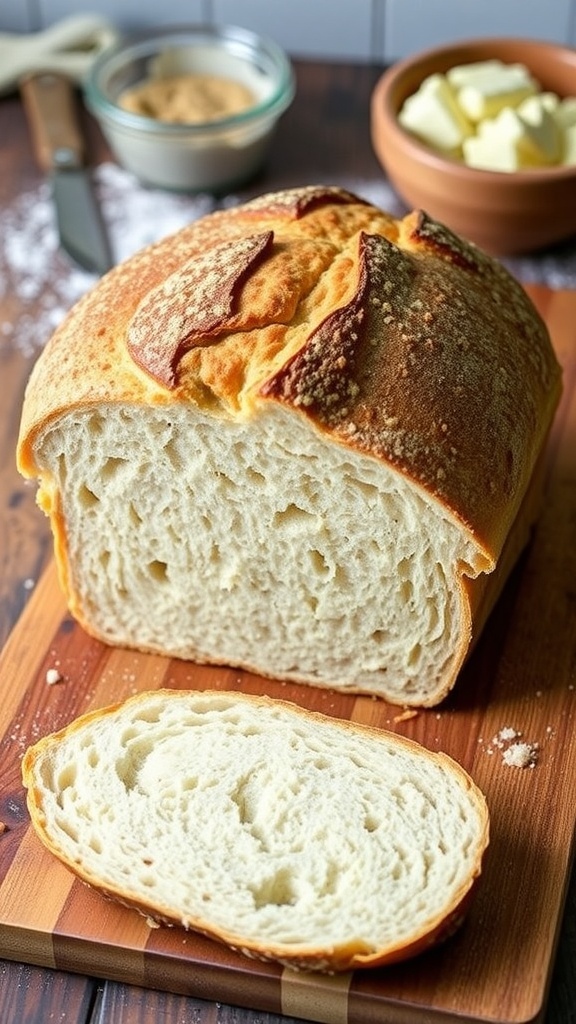
This high altitude sourdough bread features a crispy crust and a chewy interior, ideal for sandwiches or toasting. The recipe takes about 4 hours from start to finish and yields one large loaf.
Ingredients
- 1 cup (240g) active sourdough starter
- 1 1/2 cups (360ml) warm water
- 4 cups (480g) bread flour
- 1 teaspoon salt
- 1 tablespoon sugar (optional for high altitude)
- 1 tablespoon olive oil (optional for moisture)
Instructions
- Mix the Starter: In a large bowl, combine the active sourdough starter and warm water. Stir until well mixed.
- Add Dry Ingredients: Gradually add the bread flour, salt, and sugar (if using) to the mixture. Stir until a shaggy dough forms.
- Knead the Dough: Turn the dough onto a lightly floured surface and knead for about 10 minutes until smooth and elastic. If using olive oil, incorporate it during kneading.
- First Rise: Place the dough in a greased bowl, cover it with a damp cloth, and let it rise in a warm place for 1-2 hours, or until it has doubled in size.
- Shape the Loaf: Gently deflate the dough and shape it into a round loaf. Place it seam side down in a floured proofing basket or bowl.
- Second Rise: Cover the loaf with a cloth and let it rise for another 30-60 minutes until puffy.
- Preheat the Oven: About 30 minutes before baking, preheat your oven to 450°F (232°C) with a Dutch oven inside.
- Bake the Bread: Carefully remove the hot Dutch oven, place the loaf inside (you can score the top for a decorative touch), cover it, and bake for 30 minutes. Remove the lid and bake for an additional 15-20 minutes until golden brown.
- Cool: Transfer the bread to a wire rack and let it cool completely before slicing.
Cook and Prep Times
- Prep Time: 30 minutes
- Cook Time: 45 minutes
- Total Time: 4 hours
- Servings: 1 large loaf
- Calories: 120kcal per slice
- Fat: 1g
- Protein: 4g
- Carbohydrates: 24g