This classic sourdough bread recipe utilizes a 100-gram starter to create a flavorful and crusty loaf. The fermentation process enhances the bread’s taste and texture, making it a favorite among home bakers.
The recipe requires minimal ingredients and time, allowing you to enjoy the satisfaction of baking your own bread with a delightful tangy flavor.
Understanding Sourdough Bread
Sourdough bread is a timeless staple that has captured the hearts of many baking enthusiasts. Its unique flavor profile comes from the natural fermentation process, which relies on wild yeast and bacteria present in the sourdough starter.
The result is a loaf with a delightful tang, crispy crust, and chewy interior. This bread not only satisfies the palate but also offers a sense of accomplishment for those who take the time to bake it at home.
Ingredients for Your Sourdough Loaf
Creating a classic sourdough bread requires just a handful of ingredients, making it accessible for bakers of all skill levels. The key components include an active sourdough starter, all-purpose flour, water, and salt.
Using quality ingredients is essential for achieving the best results. The right flour contributes to the bread’s structure, while the starter infuses it with flavor. Remember, the quality of the water can also impact the final product, so use filtered or room temperature water for optimal results.
The Fermentation Process
The fermentation stage is where the magic happens. It typically takes around 24 hours from start to finish, including both the bulk fermentation and final proofing stages. During this time, the dough develops its flavor and texture.
After mixing the ingredients, allowing the dough to rest during the autolyse phase helps hydrate the flour, which is crucial for gluten development. This step sets the foundation for a well-structured loaf.
Shaping and Proofing Your Dough
Once the dough has undergone bulk fermentation, it’s time to shape it. This step is vital for creating a loaf that holds its form while baking. Whether you choose a round or oval shape, ensure to handle the dough gently to preserve the air bubbles formed during fermentation.
The final proofing stage can be done at room temperature or in the refrigerator for a slower fermentation. This choice can influence the flavor and texture of the bread, allowing for a more complex taste profile.
Baking Your Sourdough
Preheating the oven is a critical step that should not be overlooked. A hot oven helps achieve that beautiful golden-brown crust that sourdough is known for. Using a Dutch oven during baking creates a steamy environment, which is essential for crust development.
Once baked, allowing the bread to cool on a wire rack is necessary. This cooling period helps set the crumb structure and enhances the overall flavor. Slicing into warm bread can lead to a gummy texture, so patience is key!
Serving Suggestions
Freshly baked sourdough bread is incredibly versatile. It pairs wonderfully with a variety of toppings, from simple butter to gourmet spreads. A bowl of olive oil and balsamic vinegar makes for an inviting dipping option, perfect for gatherings or a cozy night in.
Consider serving slices alongside soups, salads, or as part of a charcuterie board. The rustic appearance and artisanal quality of sourdough elevate any meal, making it a delightful addition to your dining experience.
Easy Sourdough Bread Recipe
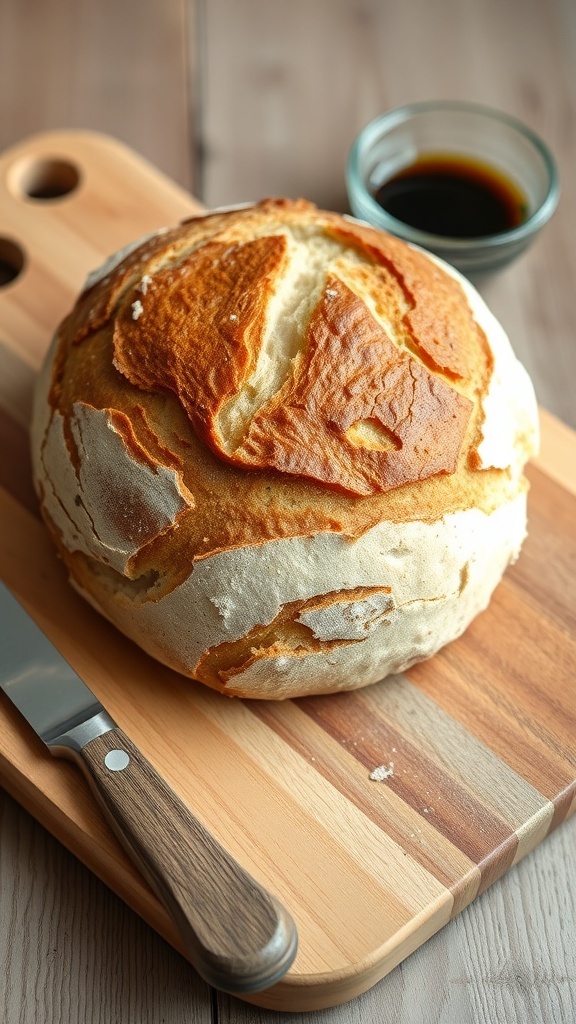
This sourdough bread features a crispy crust and a soft, chewy interior. The process takes approximately 24 hours from start to finish, including fermentation and baking time, and yields one large loaf.
Ingredients
- 100 grams sourdough starter (active and bubbly)
- 400 grams all-purpose flour
- 300 grams water (room temperature)
- 10 grams salt
Instructions
- Mix the Dough: In a large mixing bowl, combine the sourdough starter, water, and flour. Mix until no dry flour remains.
- Autolyse: Let the dough rest for 30 minutes to 1 hour to allow the flour to hydrate.
- Add Salt: Sprinkle the salt over the dough and mix it in by pinching and folding the dough until fully incorporated.
- Bulk Fermentation: Cover the bowl with a damp cloth and let the dough rise at room temperature for 4 to 6 hours, performing stretch and folds every 30 minutes during the first 2 hours.
- Shape the Dough: After bulk fermentation, turn the dough out onto a lightly floured surface. Shape it into a round or oval loaf.
- Final Proof: Place the shaped dough into a floured proofing basket or bowl, cover, and let it rise for 1 to 2 hours, or refrigerate overnight for a slower fermentation.
- Preheat the Oven: About 30 minutes before baking, preheat your oven to 450°F (230°C) with a Dutch oven inside.
- Bake the Bread: Carefully transfer the dough into the preheated Dutch oven, cover, and bake for 30 minutes. Remove the lid and bake for an additional 15-20 minutes until golden brown.
- Cool: Let the bread cool on a wire rack for at least 1 hour before slicing.
Cook and Prep Times
- Prep Time: 30 minutes
- Rest Time: 4-6 hours
- Total Time: 24 hours (including overnight proofing)
- Servings: 1 loaf
- Calories: 1200kcal
- Fat: 2g
- Protein: 30g
- Carbohydrates: 250g