This classic sourdough bread recipe produces a crusty loaf with a tangy flavor and chewy texture. Made with just a few simple ingredients, it requires a sourdough starter to achieve its unique taste.
The process involves mixing, fermenting, shaping, and baking, but the results are well worth the effort. This recipe is perfect for both beginners and experienced bakers looking to create homemade sourdough.
The Art of Sourdough Bread Making
Sourdough bread has a unique charm that captivates both novice and seasoned bakers alike.
Its creation involves a delicate balance of time, temperature, and technique.
The process begins with a sourdough starter, which is the heart of this bread, providing the necessary fermentation and flavor.
Understanding the fermentation process is key.
It allows the dough to develop its characteristic tangy flavor and chewy texture.
Patience is essential, as the dough requires time to rise and develop its unique qualities.
Ingredients for Success
The beauty of sourdough lies in its simplicity.
With just a few basic ingredients, you can create a loaf that is both rustic and delicious.
Active sourdough starter, warm water, all-purpose flour, and salt are all you need to embark on this baking journey.
Each ingredient plays a vital role in the final product.
The sourdough starter introduces natural yeast and bacteria, while the flour provides structure.
Salt enhances flavor and controls fermentation, ensuring a well-balanced loaf.
Mixing and Fermentation
The first step in creating your sourdough is mixing the dough.
Combining the starter and warm water creates a lively mixture that invites the flour to join in.
Allowing this mixture to rest for a brief period helps hydrate the flour, making it easier to work with.
Once the dough has rested, adding salt is crucial.
Mixing it in by hand ensures even distribution, which is vital for flavor and fermentation.
The bulk fermentation phase is where the dough truly comes to life, expanding and developing its structure.
Shaping and Proofing
After the bulk fermentation, shaping the dough is an art form in itself.
Turning it out onto a floured surface and forming it into a round loaf sets the stage for the final proof.
This step is essential for achieving the desired shape and texture.
Proofing can be done at room temperature or in the refrigerator for a slower fermentation.
Each method offers distinct flavors and textures, allowing bakers to experiment and find their preferred style.
The anticipation builds as the dough rises, ready to be transformed into a beautiful loaf.
Baking to Perfection
Preheating the oven with a Dutch oven inside creates an ideal baking environment.
This method traps steam, resulting in a crust that is both crispy and golden brown.
Carefully transferring the dough into the hot Dutch oven is a moment of excitement and precision.
Baking the bread requires keen attention.
The initial covered baking allows the dough to rise, while the final uncovered baking develops that signature crust.
Once the loaf emerges from the oven, the aroma fills the kitchen, signaling the success of your efforts.
Enjoying Your Sourdough
After cooling, slicing into the loaf reveals the airy, chewy interior, showcasing the hallmark holes of well-made sourdough.
Each slice is a testament to the time and care invested in the process.
Pairing it with olive oil and herbs for dipping enhances the experience, making it perfect for sharing.
Whether enjoyed fresh or toasted, sourdough bread brings warmth and comfort to any meal.
Its rustic appearance and delightful flavor make it a cherished addition to any kitchen.
Baking sourdough is not just about the bread; it’s about the joy of creating something special from simple ingredients.
Easy Sourdough Bread Recipe
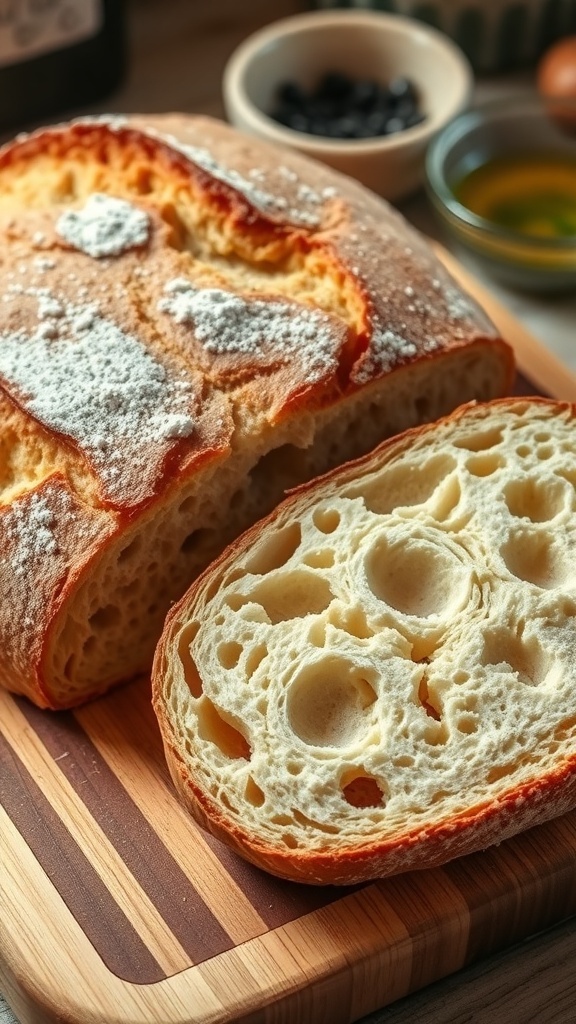
This sourdough bread features a crispy crust and a soft, airy crumb. The recipe takes about 24 hours from start to finish, including fermentation time, and yields one large loaf.
Ingredients
- 1 cup (240g) active sourdough starter
- 1 1/2 cups (360ml) warm water
- 4 cups (480g) all-purpose flour
- 1 1/2 teaspoons salt
Instructions
- Mix the Dough: In a large bowl, combine the active sourdough starter and warm water. Stir in the flour until no dry bits remain. Let the mixture rest for 30 minutes.
- Add Salt: Sprinkle the salt over the dough and mix it in using your hands until fully incorporated.
- Bulk Fermentation: Cover the bowl with a damp cloth and let it rise at room temperature for about 4-6 hours, performing stretch and folds every 30 minutes for the first 2 hours.
- Shape the Dough: Turn the dough out onto a floured surface and shape it into a round loaf. Let it rest for 30 minutes, then shape it again and place it in a floured proofing basket.
- Final Proof: Cover the dough and let it proof for 2-4 hours at room temperature, or overnight in the refrigerator for a slower fermentation.
- Preheat the Oven: About 30 minutes before baking, preheat your oven to 450°F (230°C) with a Dutch oven inside.
- Bake the Bread: Carefully transfer the dough to the hot Dutch oven, cover it, and bake for 30 minutes. Remove the lid and bake for an additional 15-20 minutes until golden brown.
- Cool: Remove the bread from the oven and let it cool on a wire rack before slicing.
Cook and Prep Times
- Prep Time: 30 minutes
- Cook Time: 45 minutes
- Total Time: 24 hours
- Servings: 1 large loaf
- Calories: 120kcal per slice
- Fat: 0.5g
- Protein: 4g
- Carbohydrates: 24g