Sourdough bread is a beloved variety known for its tangy flavor and chewy texture. This recipe uses a natural starter, which gives the bread its characteristic taste and crust.
Making sourdough bread requires patience and practice, but the process is rewarding. You’ll learn how to create a starter, shape the dough, and bake the perfect loaf.
The Allure of Sourdough Bread
Sourdough bread stands out for its unique tang and chewy texture, making it a favorite among bread enthusiasts. The natural fermentation process, driven by wild yeast and bacteria in the starter, contributes to its distinctive flavor profile.
Creating sourdough bread is a journey that requires time and dedication. The satisfaction of nurturing a starter and watching the dough rise is unparalleled. Each step in the process, from mixing to baking, brings you closer to that perfect loaf.
Understanding the Ingredients
The foundation of sourdough bread lies in its simple ingredients: active sourdough starter, warm water, all-purpose flour, and salt. Each component plays a vital role in developing the bread’s flavor and texture.
The sourdough starter is the star of the show, providing the necessary leavening and tanginess. Using high-quality flour ensures a robust structure, while salt enhances flavor and controls fermentation. These elements work together harmoniously to create a loaf that is both satisfying and delicious.
The Art of Fermentation
Fermentation is a critical phase in sourdough bread making. The process begins with mixing the starter, water, and flour to form a shaggy dough. This initial mixture is left to rise, allowing the natural yeasts to work their magic.
During the first rise, the dough should double in size, indicating that fermentation is progressing well. This stage is essential for developing the bread’s texture and flavor. A longer fermentation time can lead to a more complex taste, so patience is key.
Shaping and Proofing the Dough
After the first rise, the dough is gently deflated and shaped into a round loaf. This shaping process is crucial as it helps create surface tension, which contributes to a better rise during baking.
Once shaped, the dough is placed in a proofing basket for its second rise. This can take a few hours at room temperature or overnight in the refrigerator for a deeper flavor. The choice of proofing time can significantly affect the final taste and texture of the bread.
Baking to Perfection
Preheating the oven with a Dutch oven inside is a game-changer for sourdough bread. The enclosed environment mimics a professional steam oven, helping to achieve that coveted crispy crust.
Scoring the top of the loaf before baking allows for controlled expansion, creating a beautiful pattern and enhancing the aesthetic appeal. The bread bakes covered for the first part of the process, then uncovered to develop a golden-brown crust.
Enjoying Your Sourdough Creation
Once baked, the bread should cool on a wire rack to set its structure. The anticipation of slicing into a freshly baked loaf is part of the joy of sourdough baking.
Each slice reveals an airy crumb and a crust that crackles when cut. Enjoy it plain, with butter, or as the base for your favorite sandwich. The versatility of sourdough bread makes it a delightful addition to any meal.
Homemade Sourdough Bread Recipe
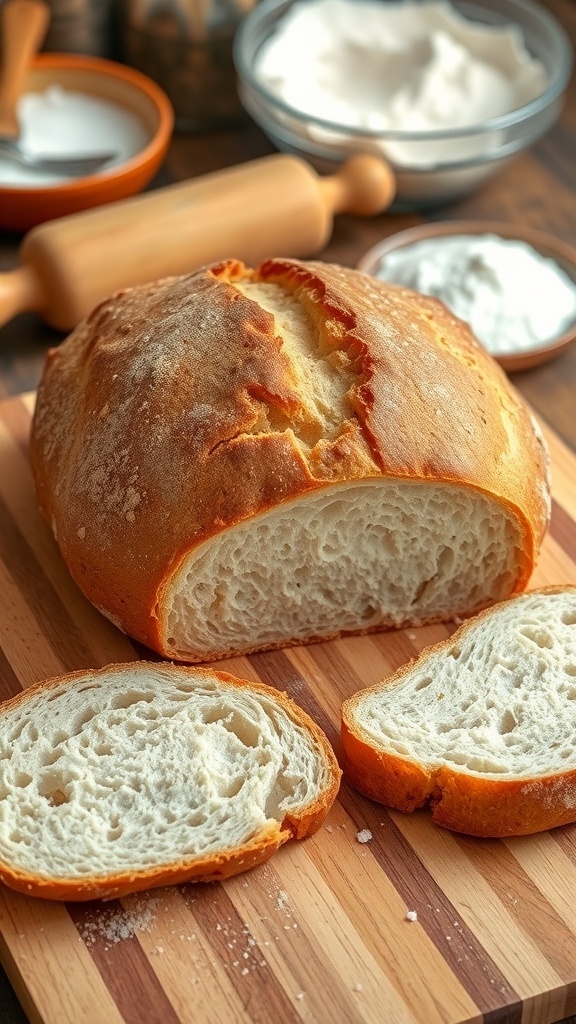
This sourdough bread features a crispy crust and a soft, airy interior. The recipe takes about 24 hours from start to finish, including the fermentation time, and yields one large loaf.
Ingredients
- 1 cup active sourdough starter
- 1 1/2 cups warm water
- 4 cups all-purpose flour
- 1 1/2 teaspoons salt
Instructions
- Prepare the Starter: Ensure your sourdough starter is active and bubbly. Feed it a few hours before starting the bread.
- Mix the Dough: In a large bowl, combine the starter, warm water, and 3 cups of flour. Stir until a shaggy dough forms. Add the salt and remaining flour gradually until fully incorporated.
- Knead the Dough: Turn the dough onto a floured surface and knead for about 10 minutes until smooth and elastic. Alternatively, use the stretch and fold method in the bowl.
- First Rise: Place the dough in a lightly greased bowl, cover with a damp cloth, and let it rise at room temperature for 4-6 hours, or until doubled in size.
- Shape the Dough: Gently deflate the dough and turn it onto a floured surface. Shape it into a round loaf and place it seam-side down in a floured proofing basket.
- Second Rise: Cover the dough and let it rise for another 2-4 hours at room temperature, or overnight in the refrigerator for a more developed flavor.
- Preheat the Oven: About 30 minutes before baking, preheat your oven to 450°F (230°C) with a Dutch oven inside.
- Bake the Bread: Carefully transfer the dough into the hot Dutch oven. Score the top with a sharp knife, cover, and bake for 30 minutes. Remove the lid and bake for an additional 15-20 minutes until golden brown.
- Cool: Remove the bread from the oven and let it cool on a wire rack before slicing.
Cook and Prep Times
- Prep Time: 30 minutes
- Cook Time: 45 minutes
- Total Time: 24 hours
- Servings: 1 large loaf
- Calories: 120kcal per slice
- Fat: 0.5g
- Protein: 4g
- Carbohydrates: 25g