If you’re looking to add a burst of flavor and some probiotic goodness to your meals, this spicy cabbage kimchi is the perfect choice. It’s a staple in Korean cuisine and brings a unique crunch and tang to any dish. This recipe is simple yet rewarding, transforming humble cabbage into a vibrant side dish that can elevate any meal.
Imagine the zing of spicy gochugaru, the crunch of fresh cabbage, and the tang of fermentation all coming together in one bowl. This kimchi recipe captures that perfect balance of heat and umami, making it a beloved addition to rice bowls, tacos, or even sandwiches.
Making kimchi at home is not just about the end product; it’s about the process of fermentation and the joy of creating something delicious from scratch. Plus, it’s a great way to preserve vegetables, ensuring you have a flavorful condiment ready whenever you need it.
The Allure of Homemade Kimchi
Homemade kimchi offers a delightful journey into the world of fermented foods. This traditional Korean dish transforms simple ingredients into a tangy, spicy delight that can enhance any meal.
Creating your own kimchi is not just about the final product; it’s an experience of combining flavors and textures. The vibrant colors of Napa cabbage, combined with red pepper flakes and fresh green onions, make for an enticing visual appeal.
The Vibrancy of Ingredients
The selection of ingredients plays a significant role in the final taste and quality of kimchi. Napa cabbage is the star of the show, providing a crunchy base that absorbs all the flavors beautifully.
Adding aromatic elements like garlic and ginger elevates the dish, while the Korean red pepper flakes bring the signature heat. This balance of components creates a condiment that is not only delicious but also packed with beneficial probiotics.
The Fermentation Process
Fermentation is where the magic really happens. After mixing the cabbage with the kimchi paste, the jars are sealed and left to ferment.
During this time, the flavors meld together, resulting in a tangy profile that transforms the humble cabbage into a vibrant accompaniment. The bubbling of the jars signals that fermentation is at work, making the anticipation of tasting even more exciting.
Enjoying Your Kimchi
Once ready, the homemade kimchi can be enjoyed in various ways. It complements rice bowls, adds a kick to tacos, or serves as a zesty sandwich topping.
The versatility of kimchi means it can be incorporated into many dishes, making it an excellent staple to keep on hand. Its unique flavor profile is sure to impress anyone who experiences it.
Storage and Longevity
Proper storage is essential to maintain the quality of your kimchi. Once it has reached the desired fermentation level, transferring it to the refrigerator slows down the process, allowing you to enjoy your creation over time.
Kimchi can last for weeks, developing more complex flavors as it continues to ferment slowly. This longevity makes it a fantastic option for meal prep while ensuring you have a robust condiment ready whenever inspiration strikes.
Creating Community Through Food
Making kimchi can be a communal activity, bringing family and friends together. Sharing the process of preparation, from chopping the cabbage to mixing the paste, fosters connections and creates memories around the kitchen table.
As you gather your ingredients and prepare to create this beloved dish, you invite both tradition and creativity into your home. Homemade spicy cabbage kimchi is not just food; it’s a celebration of flavor and culture.
The Best Cabbage Kimchi Recipe
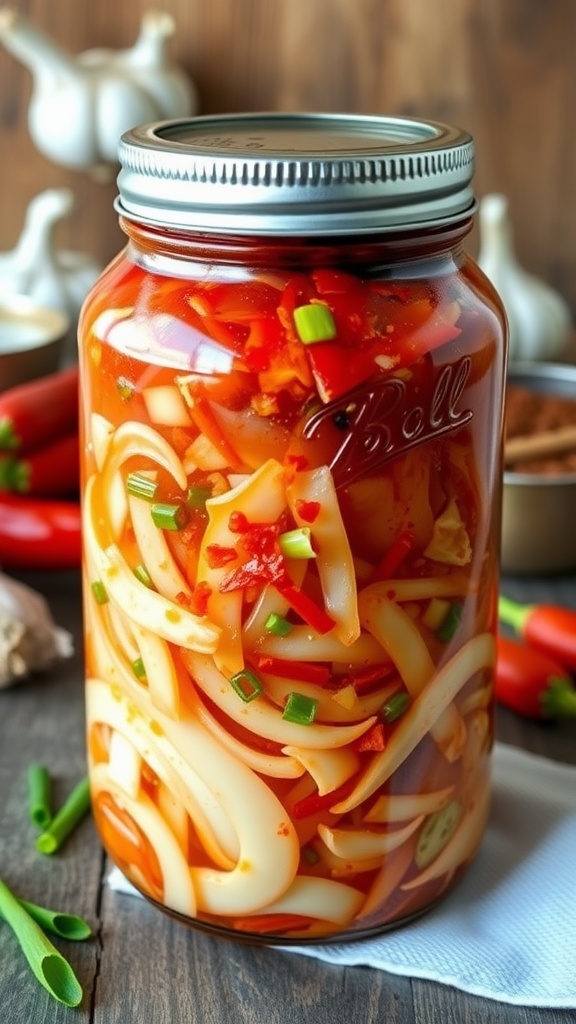
This spicy cabbage kimchi is made with fresh Napa cabbage, aromatic garlic, ginger, and Korean red pepper flakes, resulting in a tangy, crunchy condiment that pairs beautifully with a variety of dishes. It’s slightly sweet, salty, and packed with complex flavors, making it an irresistible addition to your table.
Ingredients
- 1 large Napa cabbage, cut into quarters and chopped
- 1/2 cup sea salt
- 4 cups water
- 1 tablespoon grated fresh ginger
- 1 tablespoon minced garlic
- 1/4 cup fish sauce or soy sauce for vegetarian option
- 1/2 cup Korean red pepper flakes (gochugaru)
- 1 teaspoon sugar
- 4 green onions, chopped
- 1 medium carrot, julienned
Instructions
- Brine the Cabbage: Dissolve the sea salt in the water in a large bowl. Add the chopped cabbage and let it soak for 2 hours, turning occasionally to ensure even brining.
- Prepare Kimchi Paste: In a separate bowl, mix the grated ginger, minced garlic, fish sauce (or soy sauce), gochugaru, sugar, and a little water to create a paste.
- Combine: Drain the cabbage and rinse under cold water to remove excess salt. In a large mixing bowl, combine the cabbage, kimchi paste, chopped green onions, and julienned carrot. Use your hands (wear gloves) to mix thoroughly until the cabbage is well coated.
- Pack into Jars: Transfer the kimchi into clean glass jars, pressing down firmly to remove air pockets. Leave some space at the top as the kimchi will expand during fermentation.
- Ferment: Seal the jars and leave them at room temperature for 1-2 days to ferment. After that, store in the refrigerator to slow down fermentation.
Cook and Prep Times
- Prep Time: 30 minutes
- Fermentation Time: 1-2 days
- Total Time: 1-2 days 30 minutes
- Servings: 4 cups
- Calories: 25kcal per serving
- Fat: 0g
- Protein: 1g
- Carbohydrates: 5g